Showing posts with label Supreme Court. Show all posts

Friday, 20 September 2024

What I Wish to See Happen in Sri Lanka


As Sri Lanka is about to have a presidential election, I decided to write about what I wish to see happen in Sri Lanka going forward. It includes what I want to see discontinue and remain of the current happenings. Out of the three main presidential candidates, the one I’m most concerned about coming to power is Anura Kumara Dissanayake. He leads the Janatha Vimukthi Peramuna (JVP) and the National People’s Power (NPP) alliance. My issues with the JVP are their communist ideology and the two insurrections they were responsible for. I don’t think they have a viable plan.


I’m pleased with the interim President Ranil Wickremesinghe’s work on Sri Lanka’s economic recovery, but am displeased with his handling of human rights and the politics he’s playing. He is contesting the presidency as an independent candidate. I think Samagi Jana Balawegaya (SJB) candidate Sajith Premadasa has sensible views on human rights, but I do not like his embrace of populism & the politics he’s doing and have concerns about his economic policies. I am not endorsing any political party or individual. I had written an article a few months ago about the current situation called “Displeased with All Sides”.


Abolish the Executive Presidency

I am of the view that the executive presidency should be abolished. The amount of power corrupts the person holding office. Recent cases of presidential abuse of power include President Ranil Wickremesinghe delaying the local government elections last year. The Supreme Court last month declared this to be a violation of voters’ essential rights. It was distressing to hear the President say following this that he wasn’t sorry for postponing the election.


In February this year, the President appointed the controversial Deshabandu Tennakoon as Inspector General of Police (IGP). This appointment was made a few months after the Supreme Court ordered Deshabandu Tennakoon to pay compensation for violating a citizen's fundamental rights and appeared to be unconstitutional. In July, the Supreme Court gave an interim order preventing Deshabandu Tennakoon from functioning as the IGP. It’s disappointing to see a lack of commitment from Ranil Wickremesinghe to abolish the executive presidency. Sajith Premadasa and Anura Kumara Dissanayake have committed to abolish the executive presidency.


Sensible Government

I wish to see a sensible government elected with sound policies. This would be a transparent government that follows proper processes and good governance. They would rectify the bad human rights situation currently going on, bring good human rights policies and repeal the controversial Online Safety Act. This government would not be corrupt and be without scandals. System change which people have been calling for would be implemented. Unity is needed in Sri Lanka with it being important for the government unifying the country including winning the trust of the minorities.


No More SLPP

The Sri Lanka Podujana Peramuna (SLPP) is the party of the Rajapaksas which caused Sri Lanka to be in the mess that it’s in. There are members aligned with the Rajapaksas who have been part of the interim government and the SLPP independent group known as the Freedom People’s Congress (FPC) who are with the SJB. With the presidential election, some changes have been made. The SLPP decided to field their own candidate Namal Rajapaksa, yet most SLPP MPs chose to support Ranil Wickremesinghe. Two SLPP members who were in the interim government decided to contest this presidential election. I consider the SLPP to be a toxic party so I don’t wish to see any faction of them having a presence in the government.


Action Against Bribery and Corruption

Bribery and Corruption are major problems occurring in Sri Lanka. Action needs to be taken against politicians who’ve been engaging in these practices, especially those responsible for Sri Lanka’s economic crisis. We also need to work on bribery and corruption prevention. Sri Lanka is reported to have stolen assets stashed abroad, with serious allegations against the Rajapaksa political family. It’s essential to recover stolen assets utilising the Stolen Asset Recovery Initiative (StAR) of the United Nations Office of Drugs and Crime (UNODC) & the World Bank Group.


Reducing the Crime Rate

Sri Lanka unfortunately has a high crime rate. Criminal activity seems to have been growing over the last five years. It’s distressing to hear of shootings going on causing loss of life. This gun violence needs to stop. The government needs to take action to reduce the crime rate as this is a serious national security concern. It’s important to incorporate teaching against crime in the school curriculum. It’s imperative to establish the rule of law in Sri Lanka.


Economic Recovery

I am of the view that Sri Lanka’s economic recovery is one present initiative going in the right direction. It’s good that the IMF program was secured. Both the SJB and NPP have said they would renegotiate the IMF agreement if they come to power. My view on the issue is this. If the IMF is willing to renegotiate and the new government comes up with sensible modifications which are able to ease the burden on the people and better reach the targets, then I am for it. My concern is of the government playing politics with Sri Lanka’s recovery where their attempts at renegotiation results in the IMF agreement being withdrawn or it’s approved with changes which makes the situation worse. I think the SJB is more sensible than the NPP when it comes to the IMF agreement.


In April this year, the ADB forecasted Sri Lanka to reach 1.9% and 2.5% growth in 2024 and 2025 after two years of negative growth. I hope to see economic growth exceeding those numbers. A few years ago, the State Owned Enterprise Restructuring Unit (SOERU) was set up at the Ministry of Finance. Many State-Owned-Enterprises (SOEs) are a drain on the economy with their losses so this is an important move. Unfortunately, the restructuring unit has been facing delays and hasn’t restructured a single SOE so far. I hope that the SOERU would be strengthened enabling it to successfully restructure SOEs.


I’m writing this just before the presidential election has occurred. When you read this, the results of the election may have come out. I know that some of these topics I’ve written about are unrealistic. I see indications to some of them in different parties, but I don’t see one party having all of them. Our messed-up politics is causing so much damage and needs to transform into something new.

Saturday, 13 July 2024

Displeased with All Sides


I decided to express my views about Sri Lanka’s politics right now. I’m displeased with all sides. I feel that when Gotabaya Rajapaksa came to power, the qualities of all the political parties deteriorated further from its already bad state. This is a serious problem that must be rectified. Sri Lanka needs to be saved from its destructive politics.


I’ll begin with President Ranil Wickremesinghe. I think he’s doing a good job with Sri Lanka’s economic recovery and engagement with the international community. After taking office in July 2022, he was able to end the queues and increase the amount of Sri Lanka’s reserves. The 5 year graph on the Trading Economics website shows reserves increasing from 1.82 billion US dollars in July 2022 to 5.37 billion US dollars in May 2024. In March 2023, Sri Lanka secured an IMF program with the third tranche approved last month. Ranil initiated reforming of State-Owned Enterprises (SOEs) that’s ongoing which is a welcome move due to the drain SOEs have on the country.


The reason why I’m not very enthusiastic about Ranil is because of his politics. I don’t like him teaming up with the Sri Lanka Podujana Peramuna (SLPP), the party of the Rajapaksas who consist of most of his government. These are individuals who were part of Gotabaya Rajapaksa’s government. It was not good to see Ranil and his government delaying the local government elections last year which still hasn’t been held. I don’t like Ranil’s handling of human rights issues, including the targeting of protestors. It was distressing to see the controversial Online Safety Bill passed earlier this year.


Ranil acted shamefully in an address to Parliament last November where he accused some members in the Constitutional Council (an independent body) of sabotage. He appointed Deshabandu Tennekoon as the Inspector General of Police (IGP) in February via the Constitutional Council. The current IGP had been ordered by the Supreme Court to pay compensation for violating a person’s fundamental rights a few months prior to his appointment. This appointment was strongly condemned by the Sri Lankan Collective Against Torture (SLCAT).


The Opposition Leader Sajith Premadasa stated that this appointment was unconstitutional. Five votes are required to approve a President’s nomination. Sajith pointed out that there were four yes votes, two no votes and two abstentions. The Speaker of Parliament can only have a casting vote when there’s a tie and he voted for this appointment. It seems that the Speaker abused his power by equating the two abstentions as votes against the appointment.


Sajith Premadasa leads the main opposition party the Samagi Jana Balawegaya (SJB). They are a breakaway party of Ranil’s party the United National Party (UNP). I have not been pleased with the conduct of Sajith Premadasa and the SJB. It’s disappointing to see him embracing populism including plans for it if the SJB comes to power. When he met with the Norwegian Ambassador a few months ago, he spoke of SJB’s plans for a “populist government”. At this year’s SJB May Day rally, Sajith mentioned “populist” as one of the changes an SJB government would make to the IMF agreement.


Sajith has been teaming up with the independent group of the SLPP that eventually became the breakaway party the Freedom People’s Congress (FPC). I did not support Sajith backing Dullas Alahapperuma from that group in the 2022 Parliamentary vote for Sri Lanka’s new President. I provided my views on this in the article “Thoughts on Gotabaya Rajapaksa’s Resignation & Aftermath”. Even though these individuals are no longer officially with the Rajapaksas, I’m not convinced they are against the Rajapaksas now. I wonder if they broke away from the Rajapaksas due to not getting the power they wanted. It’s worth noting that Dullas Alahapperuma attended the book launch of “Nine: The Hidden Story” by Wimal Weerawansa. At this event, Wimal made wild accusations against the US including being responsible for Gotabaya Rajapaksa’s exit from power.


One example of Sajith collaborating with FPC MPs is having Nalaka Godahewa as an economic advisor. Nalaka had previously been an economic advisor to Gotabaya Rajapaksa and a founding member of Viyathmaga. His tenure as Chairman of the Securities and Exchange Commission of Sri Lanka (SEC) a decade ago was controversial and faced corruption allegations.


The SJB is opposing everything the government is doing for the sake of opposing. My point isn’t to defend the government or to dismiss all criticisms of the SJB. The SJB is correct to speak out against the bad governance that’s going on. The problem I have is their constant opposition to economic recovery initiatives. When it came to the 21st Amendment to reduce presidential powers following Gotabaya Rajapaksa’s exit, they voted for it. I would have liked to see them similarly vote and participate in some of the economic recovery efforts. They were previously with Ranil and can easily find common ground with him on this front. I think it was immature of them refraining from voting in Parliament for the IMF agreement in April last year. This is despite previously calling for IMF assistance.


I’ll now mention issues I have with both Ranil and Sajith. Dr. Nihal Jayawickrema mentioned in his article “The Constitutional Council – Is It Under Threat?” of Ranil stating that the Constitutional Council is an “executive body” and Sajith stating that it’s “part of the legislature”. They are both incorrect as the Constitutional Council is an independent office of seven parliamentarians and three civil society members who approve or reject the President’s nominations to head state institutions. I don’t like the fact that both Ranil and Sajith have a group of SLPP members with them. It seems to me like they’re trying to compete with who has more SLPP parliamentarians. I want to see a government formed with no SLPP members of any faction including under different names like the FPC.


A growing force is the National People’s Power (NPP). The main party in the NPP is the Janatha Vimukthi Peramuna (JVP) led by Anura Kumara Dissanayake. I’m concerned that the NPP will come to power. While the JVP is a legitimate political party now, they were previously responsible for two insurrections. This brings risks of them governing in a brutal, violent and oppressive way. I don’t agree with their communist ideology which I feel could derail Sri Lanka’s economic recovery and make the situation even worse. Sri Lanka already has a bloated public sector and I could see the NPP expanding that.


I wish to see the SJB re-integrated with the UNP and the UNP being headed by neither Ranil nor Sajith. I think this fighting between the SJB and the UNP is not in Sri Lanka’s best interest and could enable the NPP to win at the coming elections. It’s my view that the UNP’s policies are more sensible than the SJB’s, but the UNP has many influential figures who reflect what’s wrong with Sri Lanka’s politics such as Akila Viraj Kariyawasam, Palitha Range Bandara, Wajira Abeywardana, Ravi Karunanayake and Sagala Ratnayaka. A rejuvenated UNP should not have such persons in leadership. One person in the UNP who I think may be suitable to lead the party is Deputy Leader Ruwan Wijewardene.


A re-integration of the two parties could bring the best qualities from them. The economic recovery and reforming of state owned enterprises that the UNP is currently involved in should continue. The SJB is rightly against the bad human rights policies of the government that the UNP is engaging in. Having the two parties together could bring back sensible human rights policies. I want the UNP to take a stand against the Rajapaksas like they used to.


Elections are coming up with a Presidential election later this year followed by a Parliamentary election that’s likely to be held next year. We need to elect a stable government with sound policies who will focus on delivering system change that the protests two years ago were calling for.


Friday, 9 April 2021

Cerno's Colombo

There is a popular Sri Lankan blogger who blogs under his online name Cerno. Five years ago, he made his Flickr photos in the public domain. I found great photos of Colombo, Sri Lanka in his Flickr so I decided to write a blog post using some of his Colombo photos with commentary by me.


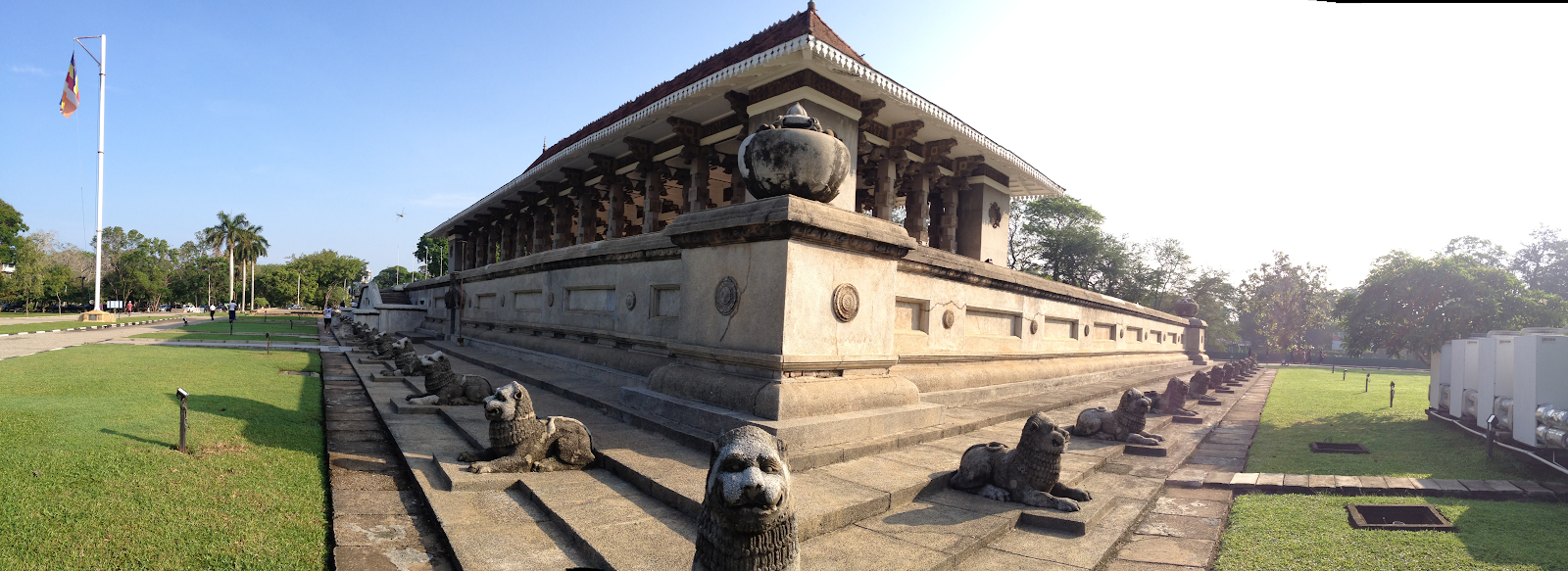
We’ll begin with two photos of Independence Square. I like the angle he took in the second photo

which is capturing the Independence Memorial Hall in a great way. 


This is a nice shot of Colombo at night featuring interesting light effects.


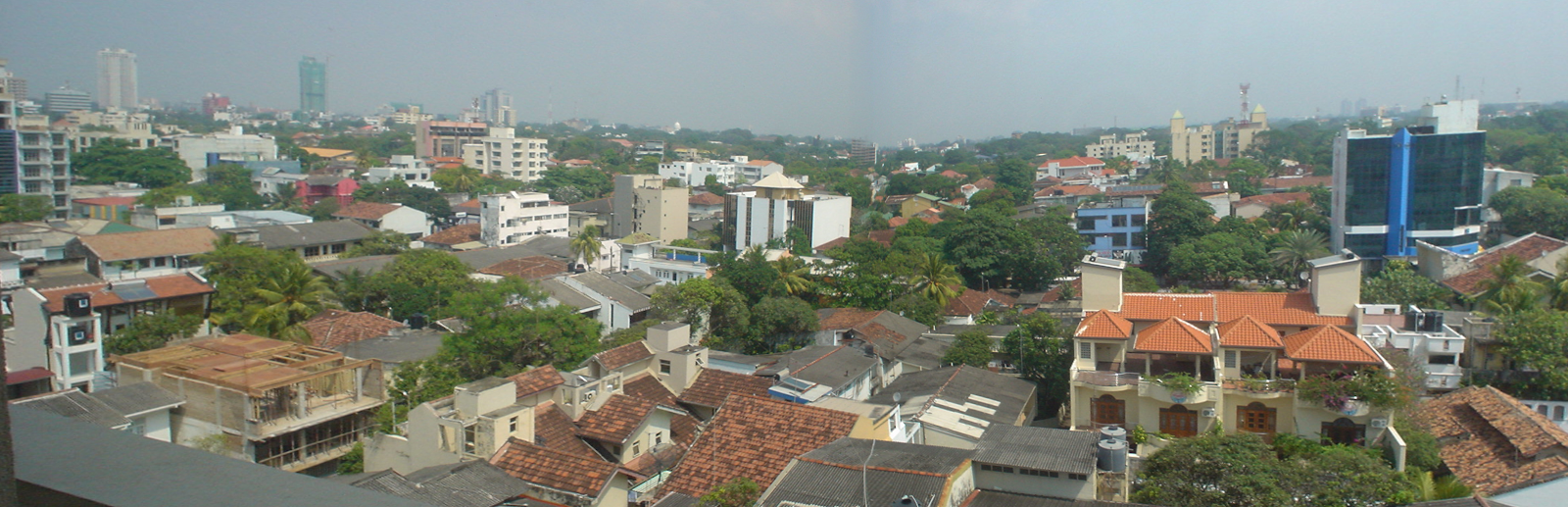
This is what Cerno calls an “Unglamorous Colombo panorama”. He had taken this photo from Durdans Hospital in 2007. While this isn’t the poshest aspect of Colombo, I wouldn’t call it unglamorous. I think it’s a nice depiction of the Colombo suburbs. The abundance of buildings in Colombo are often criticised, but for me that’s part of Colombo’s charm. This picture has a lot of trees alongside buildings which I think is an aspect of the Colombo look and feel.


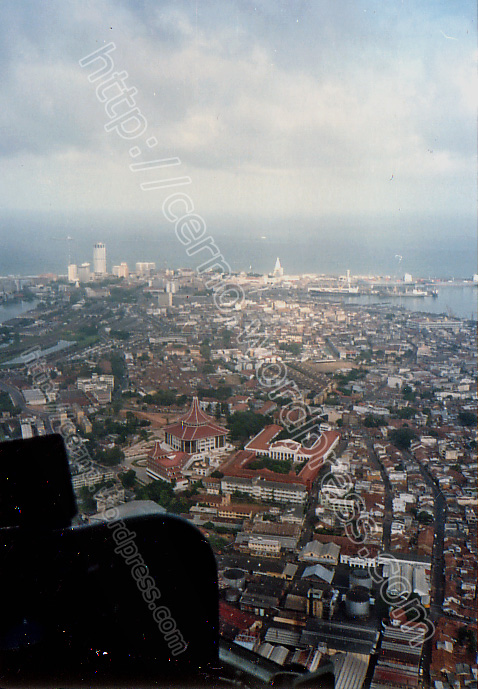
Here’s an old photo of Colombo probably taken in the mid or late 1980s. Sri Lanka’s Supreme Court complex can be seen in the picture. Colombo looks so different to how it is now.


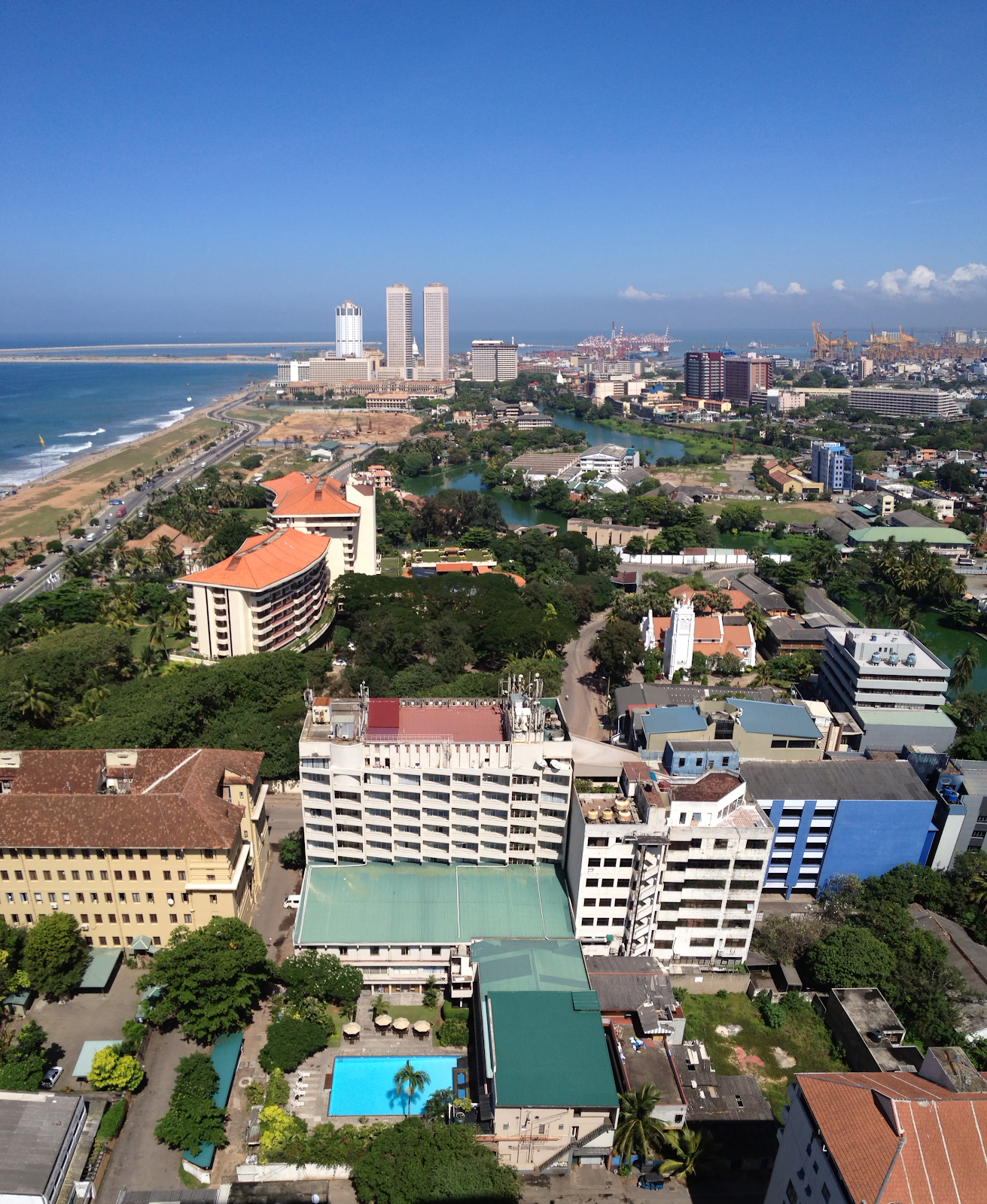
Here’s a photo of Colombo taken much more recently in December 2012. This provides a strong

contrast to the previous picture taken in the 1980s. While both photos were taken from different places,

they both point towards Colombo Fort with the Bank of Ceylon building being the most common link

between the two. I personally prefer contemporary Colombo. This is the first in a set of photos Cerno

seems to have taken from a building.


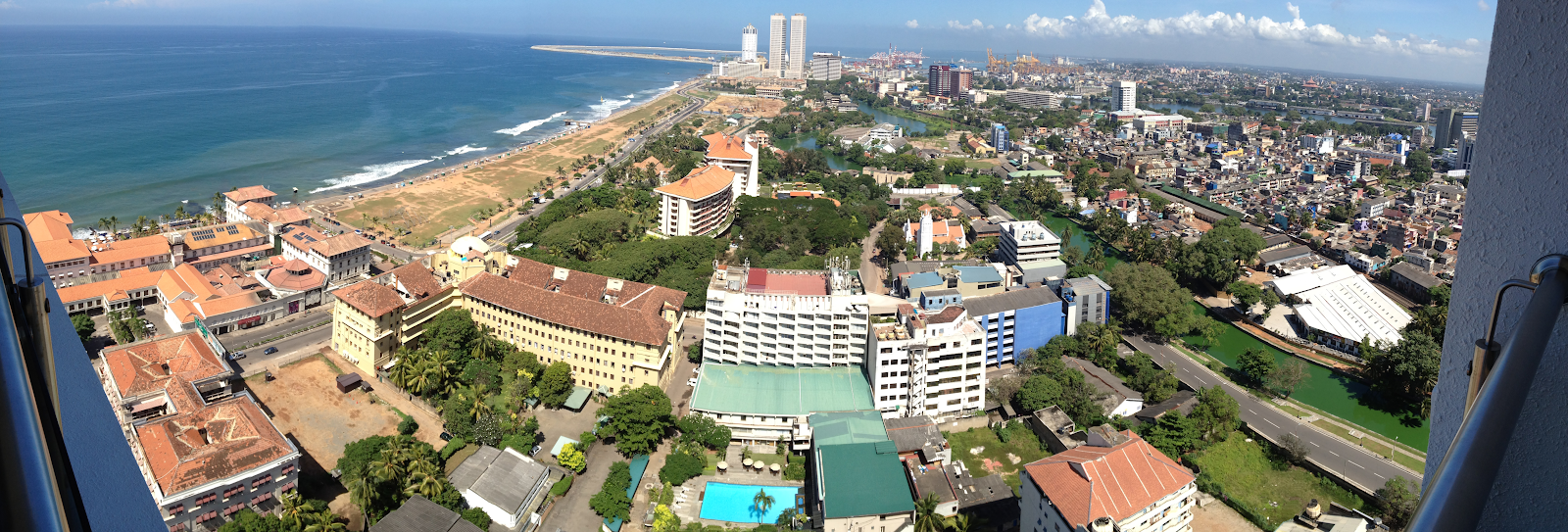
Here’s a panorama taken from the same position, thus we get a much wider view including a better

look at the sea. Just like in the previous photo, we see alongside buildings many trees and the Beira

Lake.


There are quite a few colourful buildings in this photo. 


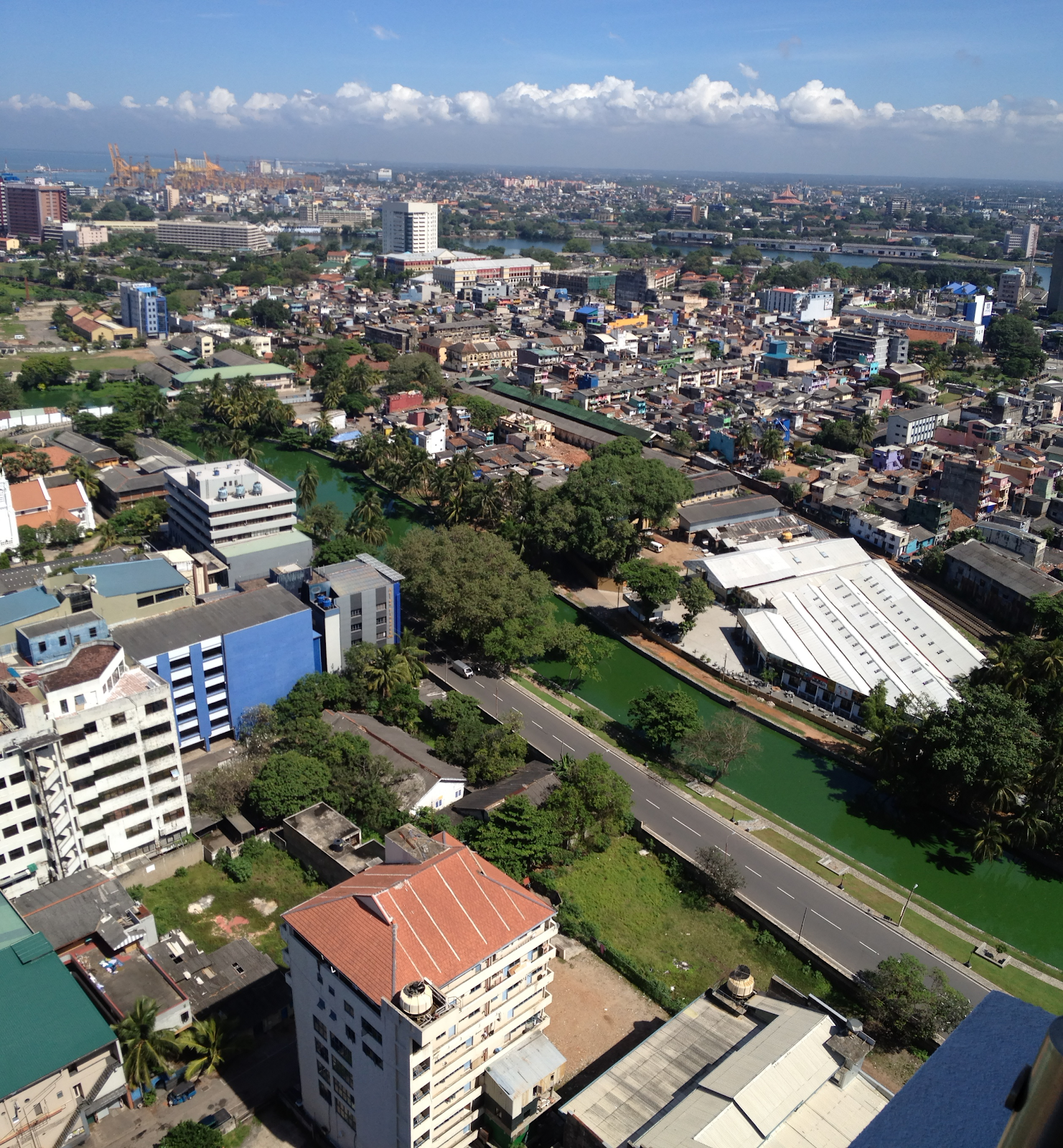
I’ll end this with a lovely shot of contemporary Colombo featuring modern buildings. We also see some

green with the trees, the Beira Lake and a bit of grass. One thing I’ve noticed in these four photos is

that there is hardly any traffic on the Colombo roads which seems strange to me as this is daytime

when the traffic is very intense. The peaceful Colombo roads are good to see.


These photos showcase attributes of Colombo which includes its history, modernity, uniqueness and

colour. If you enjoyed this, you may be interested in my previous blog post “Captivating Colombo”

featuring photos I took of Colombo. I also started off that post with Independence Square. 

Monday, 31 December 2018

Five Interesting Facts from the History of Sri Lanka's Governance


When it comes to the history of Sri Lanka’s government, there are some incidents and facts not
widely known or are known mainly by the older generation of Sri Lankans due to many years passing
since its occurrence. In this article, I am compiling five interesting facts from the history of Sri Lanka’s
governance. It begins 87 years ago.

1. Ministers without Ministries
Before Sri Lanka’s (then Ceylon) Independence in 1948, from 1931 to 1947 there were Ministers but no Ministries under the Donoughmore Constitution. I wonder how the government functioned at this time without Ministries. A possibility I can see is that there was a group of staff under all Ministers performing the responsibilities of Ministerial staff.

2. Ministers without Portfolios
Sri Lanka's first Cabinet was appointed 71 years ago on the 14th of October 1947, the day of the first session of Sri Lanka’s Parliament known then as the House of Representatives. In this Cabinet, there was a Minister (R.S.S. Gunawardena) without a portfolio. He was also Chief Government Whip who was unseated via an election petition on the 12th of March 1948. R.S.S. Gunawardena continued to function in his positions until replacements were made in May 1948. Interestingly his successor A.E. Goonesinghe also functioned as a Minister without Portfolio and a Chief Government Whip, though he also got assigned the Minister of State portfolio on the 26th of July that year. I’m interested to know what these Ministers functions were. Perhaps their work included working on topics not covered in the other Ministerial portfolios. 

3. Parliament with Two Houses
As pointed out above, Parliament was known as the House of Representatives at the time of Sri Lanka’s independence. The House of Representatives was one of two houses of Parliament, with the House of Representatives being the Lower House and the Senate of Ceylon being the Upper House. The House of Representatives at its first sitting had 101 MPs, with 95 elected and six appointed by the then Governor-General who represented Britain’s monarch. The Senate had 30 members with 15 members being elected by the House of Representatives and 15 nominated by the Governor-General on the Prime Minister’s advice. The Senate was led by a President and it enabled a system of accountability towards the House of Representatives. This institution continued until its abolishment in 1971. I intend to write about the Senate of Ceylon in a future article.

4. The First Speaker Standing Up to the Prime Minister
The first Speaker Francis Molamure is reported to have told Prime Minister D.S. Senanayake to take his seat. Nihal Seneviratne, former Secretary-General of Parliament revealed in a conversation (video in link) with political scientist Asoka Obeyesekere that he was told that the first Speaker said to Prime Minister D.S. Senanayake: “Honourable Prime Minister, I think you are being irrelevant. Please take your seat.” I hope to see this happen again.

5. Two MPs for Kalawana
Following the 1977 general election, there were two people claiming the seat of Kalawana, a town 106
km from Colombo in the Ratnapura district. The seat was won by Mr. Abeyratne Pilapitiya of the
United National Party (UNP), the party which won the general election. For some reason, it was
challenged by Mr. Sarath Muttetuwegama of the Communist Party of Sri Lanka (CPSL) who
contested against him via an election petition. Mr. Pilapitiya was involved with an accident, and stayed
away from Parliament without requesting leave. As a result of this, he lost his seat which was
believed to be an intentional move on his part. His party then nominated him to fill the vacancy,
changing his position from an elected MP to a nominated MP. In late 1980, the election petition result
in the Supreme Court unseated Mr. Pilapitiya and a by-election was conducted in January 1981 that
elected Mr. Sarath Muttetuwegama.

At about the same time, the government led by then President J.R. Jayewardene brought in a bill, the Third Amendment to the Constitution that would enable the Kalawana electorate to have two MPs, one elected and the other nominated. The Supreme Court ruled that this amendment required both a two-thirds majority and a referendum. Though the bill was passed with a two-thirds majority, a referendum was not held. This issue was concluded with Mr. Pilapitiya resigning resulting in Mr.Muttetuwegama taking his seat as the MP for Kalawana. This shows an instance of the judiciary preventing presidential abuse of power.

Conclusion
I hope you enjoyed these five facts from the history of Sri Lanka’s governance. I’d be interested in
hearing from anyone who remembers any of these happenings, knows more details or has similar
stories they’d like to share.

Friday, 30 November 2018

Thoughts on President Sirisena's Shocking Betrayal


Last month, the Sri Lankan President Maithripala Sirisena sadly began degenerating into a greedy
power hungry politician. This noticeably started on the 26th of October 2018 in his shocking move
where he unconstitutionally sacked Prime Minister Ranil Wickremesinghe and appointed former
President Mahinda Rajapaksa as Prime Minister. This was followed by him proroguing Parliament on
the following day. Two weeks later, he made another unconstitutional move on the 9th of November
where he dissolved Parliament and called for general elections to be held in January. The dissolving
of Parliament has been temporarily suspended by the Supreme Court of Sri Lanka whose final
judgement is scheduled to be delivered of the 7th of December. It is very distressing to see the
President brazenly violate the Sri Lankan Constitution and betray everything he stood for. In this
article, I’ll be giving some of my thoughts on the President’s behaviour.


Violating His Own Restrictions
In April 2015, the 19th Amendment to the Constitution of Sri Lanka was passed in Parliament. The
President was one of the key people responsible for the 19th Amendment. Some features of the 19th
Amendment include the restoration of the two-term limit for Presidents and the removal of the
President’s ability to sack a Prime Minister & to dissolve Parliament until the first four and a half
years of its term. Having done the last two actions, he has violated the very restrictions he was
instrumental in bringing about.


Unethical Conduct  
I think this conduct is very unethical as the President purported to remove the man who helped him
win the Presidency and appointed the very man he contested against. In November 2014, Maithripala
Sirisena who was then the Health Minister in the Mahinda Rajapaksa government, crossed over to
Mahinda Rajapaksa seemed very difficult then and it was achieved on 8th January 2015. The
President even said in 2015 after former President Rajapaksa got nominations to contest in the 2015
general elections that if the Sri Lanka Freedom Party (SLFP) won, he wouldn’t appoint Mahinda
Rajapaksa as Prime Minister. What President Sirisena did is a betrayal of his mandate of good
governance, accountability, reconciliation, media freedom among other issues. He was elected to
usher in a new era to Sri Lanka and had the potential to be a good President, but he has sadly
reverted to the lowest level of political indecency.


Since the 26th of October, he has been acting in such a disgraceful way. He has been getting
involved in and supporting a very bad form of governance. Incidents include the forceful taking over of
state media by those loyal to Mahinda Rajapaksa, apparent bribery as United National Party (UNP)
MP Palitha Range Bandara claims that he was offered $2.8 million USD to crossover and the
disrupting of Parliamentary proceedings by many United People’s Freedom Alliance (UPFA) MPs. I
don’t believe the appointments to the role of Prime Minister and the Cabinet by President Sirisena
were constitutional, but even if you put aside the constitutionality of his actions, it’s very distressing to
see his reactions following the no-confidence motions passed against Mahinda Rajapaksa and his
purported government. Firstly, it’s him not accepting the first no-confidence motion. He requested the
first clause stating that the appointments were illegal to be removed which was adhered to resulting
in a second no-confidence motion being passed. He again did not accept the second no-confidence
motion. This is disgusting behaviour to request for something, have it granted and then not do what
you promised.


Party Centric Thinking
An issue I had with President Sirisena was that he had been focusing too much on his party the
SLFP which got into conflict with his mandate and his working relationship with Ranil
Wickremesinghe & the UNP. It is my perception that those actions led to this moment. I wish he
had been an Independent President, that is being a President with no party allegiances. I think this
arrangement would have resulted in him accomplishing more, making more sensible decisions and
not reuniting with Mahinda Rajapaksa.  


The Need to Abolish the Executive Presidency
The President’s actions to me are a reason why the Executive Presidency should be abolished. It
shows that the powers of the Sri Lankan President can easily corrupt those who come in with good
intentions. This is despite the fact that President Sirisena himself was responsible for reducing
presidential powers. In fact, founder of the Citizens’ Movement for Good Governance (CIMOGG),
Attorney-at-Law Elmore Perera who contributed in 2016 to my article “Impact of the 19th Amendment
One Year On” said the thought provoking words in my correspondence with him that I didn’t include
there, “It was widely agreed that 35 years of experience had shown that the Executive Presidency
had contributed immensely to several of the ills that plagued the country.”


The Presidential system enables Governments to be formed where the President and the Prime
Minister are from two different parties. This results in the two leaders getting into conflict with one
another, which happened in the relationship between Maithripala Sirisena and Ranil Wickremesinghe
despite the fact that they came together on the same platform. I am in favour of a ceremonial
President which Sri Lanka did have from 1972 to 1978. I think that a ceremonial President would not
get into conflict with the Prime Minister, as the President in this situation wouldn’t be a member of a
political party. I further think that an Executive Prime Minister would have less opportunities to abuse
his or her position than an Executive President.


Conclusion
These are very sad and difficult times for Sri Lanka, which is so disturbing as the cause of these
problems comes from the President elected against the type of governance he has been currently
practicing. I am pleased that the actions of Maithripala Sirisena and Mahinda Rajapaksa seem to be
getting weakened and remain confident that the status quo in Parliament prior to the 26th of October
can be restored. It’s encouraging to see activism against the actions of the President by many Sri
Lankans. This activism gives hope that it can drive our country further once we are out of this mess.