Showing posts with label Parliament. Show all posts

Saturday, 26 September 2026

The Need to Revive Sri Lanka’s LRT Project


In 2017, for this blog I interviewed Dr. Dimantha De Silva about the Colombo Transport Plan of the Megapolis Project. He was Consultant/Team Leader of the Colombo Transport Plan. The Megapolis and its Colombo Transport Plan was an initiative of the then Sri Lankan government. This plan included a Light Rail Transit (LRT) system which is a form of rail transit for Sri Lanka’s most populous city Colombo. In March 2019, the Daily News reported that a loan was signed between the Sri Lankan government and the Japan International Cooperation Agency (JICA) to construct an LRT Line from Malabe to Colombo Fort.


When I was interviewing Dimantha in May 2017, I was concerned that Gotabaya Rajapaksa would become Sri Lanka’s next President and cancel this project. Unfortunately, he was elected President in November 2019. Gotabaya Rajapaksa governed disastrously which culminated in Sri Lanka’s economic collapse in 2022 alongside protests which successfully resulted in his resignation. In September 2020, Gotabaya Rajapaksa terminated the LRT project. It was so tragic to see a positive transportation project get cancelled due to Sri Lanka’s broken political system. It had a very beneficial loan condition for Sri Lanka and the agreement had already been signed with JICA.


On the 23rd of July, the Daily News reported that Minister of Transport, Highways and Urban Development Bimal Rathnayake said in Parliament that a final decision has not currently been made on whether to resume the LRT project. Minister Ratnayake mentioned that compensation has been paid to two companies with one of the Japanese companies requesting additional interest payment for the delay. He also said a special committee has been formed to investigate this issue.


I am of the view that the National People’s Power (NPP) government should revive the LRT project. They are involved in positive transport projects right now. This year, the Metro Bus service was launched which continues to expand. These are modern Foton buses with the service run by the Lanka Metro Transit company. Minister Rathnayake stated in July that Sri Lanka will take steps to introduce an electric railway service in 2027. Its first phase will consist of three routes. He gave an update this month that construction is expected to begin in May or June next year.


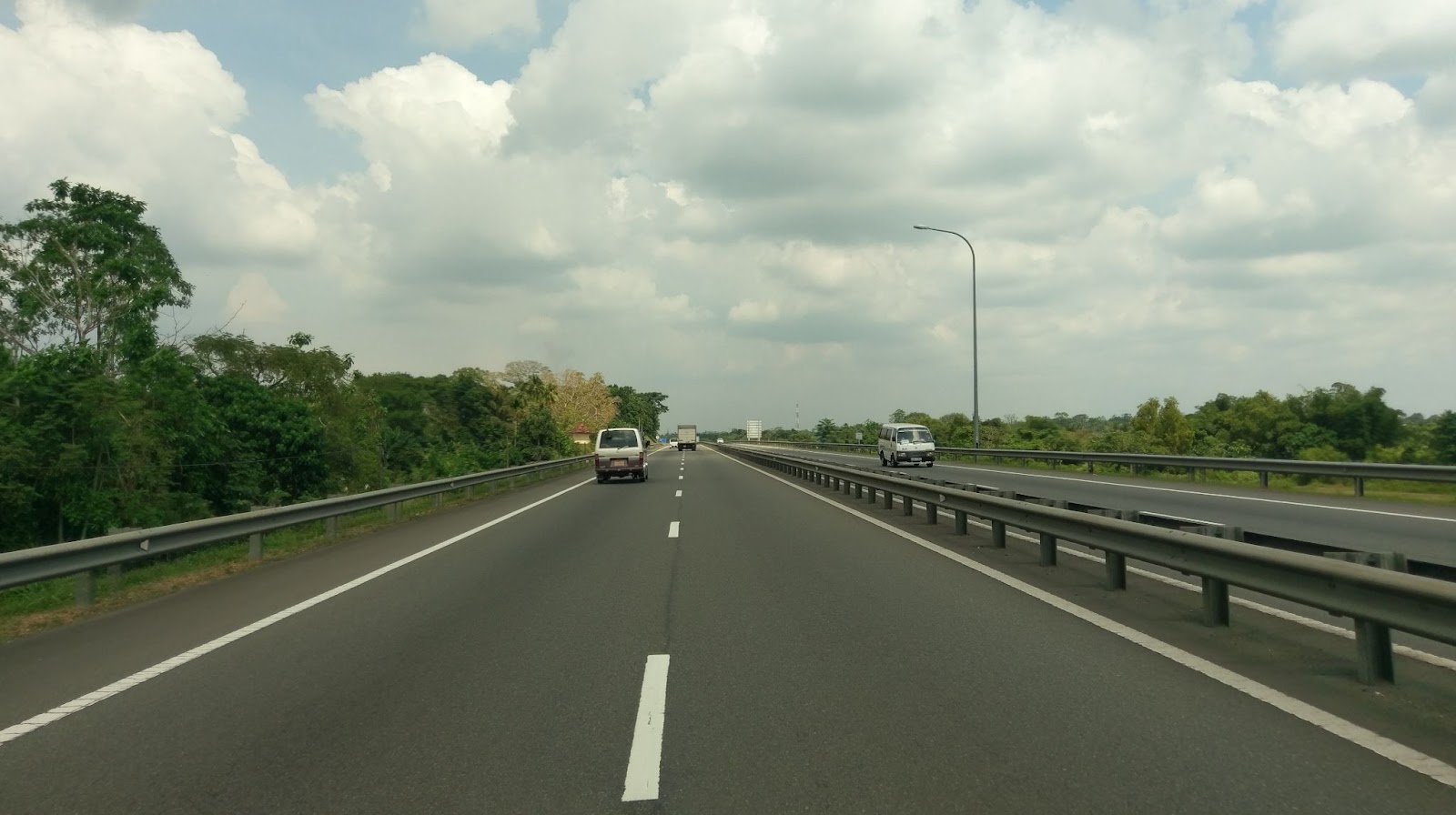
In July, the Cabinet of Ministers approved a purchase of 600 new deluxe buses with air-conditioning. These buses are for the Sri Lanka Transport Board (SLTB). Minister Rathnayake mentioned in Parliament earlier this month that many new expressways will start construction before the end of 2026. The government just launched a national program to make dangerous and unsafe parts of roads outside of highways safe. On the 18th of this month, the government signed Memorandums of Understanding for this program with local government bodies. Prasanna Gunasena, Deputy Minister of Transport and Highways revealed on the 20th that the construction of Kandy’s Mahaiyawa’s underpass is about 80% done with it aiming to be finished by December. The purpose of the underpass is to improve commuter access to Kandy and to help reduce Kandy’s traffic congestion.


Japan is involved with the Sri Lankan government’s current transport initiatives. Around the beginning of this month, the Japanese government donated seven low-floor buses to Sri Lanka in order to enhance the Sri Lankan public transport system. These bus donations are by both the Japanese government and residents of Yokohama, Japan. This is part of the Metro Bus service as the donated buses were handed over to Lanka Metro Transit, the company responsible for the Metro Buses.


The Japanese government’s development agency JICA who were set to give the LRT loan is currently involved in Sri Lankan development projects. JICA is involved in setting up a Doppler Weather Radar Network in Puttalam. It is being constructed right now and expected to be completed next year. This is funded by Japan’s Grant Aid and will help Sri Lanka prepare for disasters. JICA provided loans for two cardiac treatment complexes in Trincomalee and Anuradhapura which just began construction. In July, Sri Lanka’s second largest water supply project was launched. JICA funded this Anuradhapura North Water Supply Project - Phase II. This month, it was reported that the Kalu Ganga Water project is about to begin. It’s a JICA loan servicing drinking water needs of families in the Colombo and Kalutara districts.


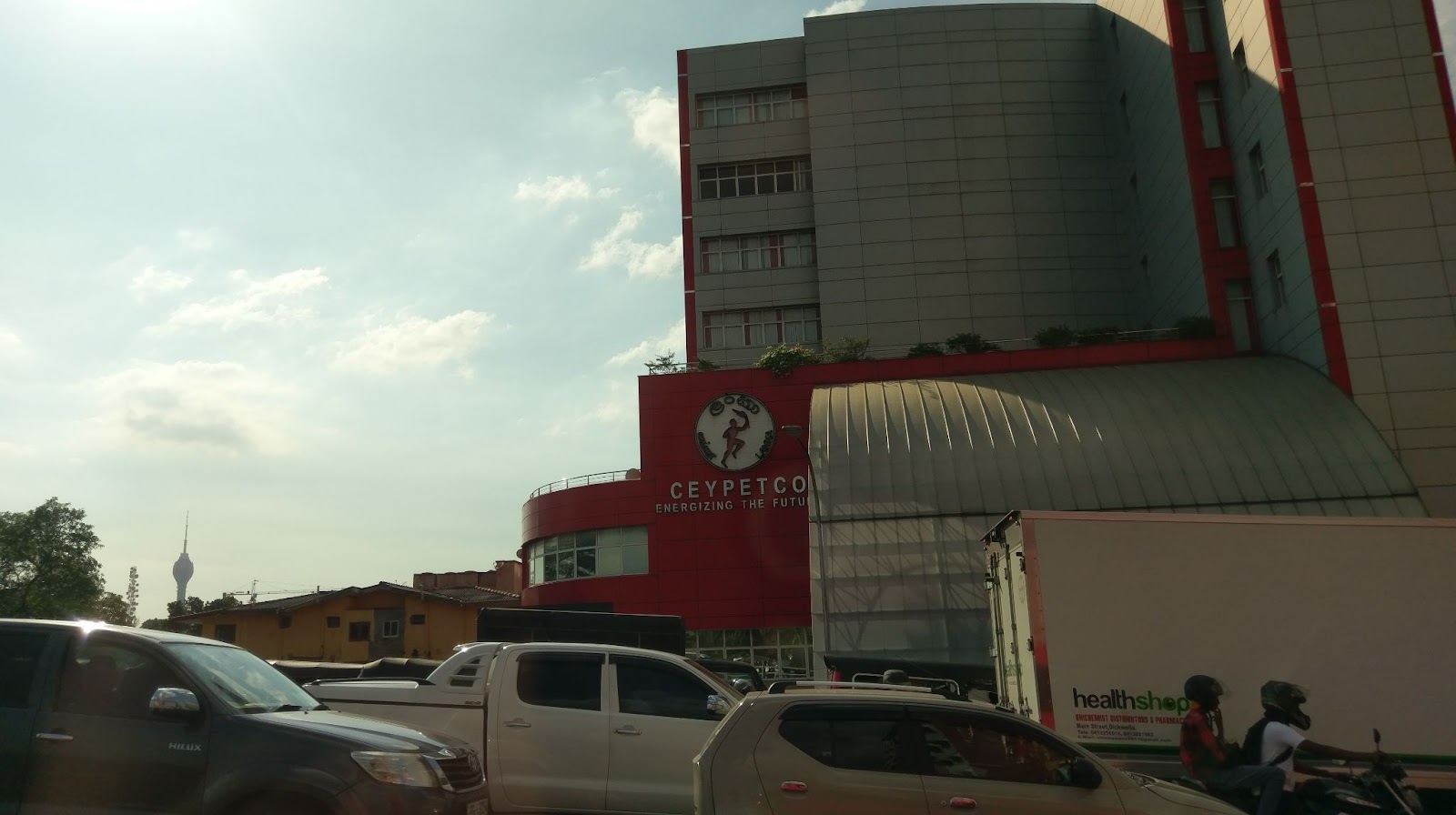
Colombo having an LRT system would greatly assist with travel as the city has too many vehicles on the roads. An LRT would enable people to travel to destinations on the list at a faster speed. It is elevated keeping it separate from regular traffic on its route enabling those vehicles to go faster due to the LRT usage. Colombo’s LRT has great potential to improve Sri Lanka’s economy. Dimantha told me how his mentors and professors in Calgary, Canada (where he lived prior to my interview and lives presently) talked about how Calgary grew and its economic levels increased when Calgary’s LRT system was introduced. He also said that it enabled investors to come in for other projects. This provides potential benefits such a system would have in Sri Lanka.


As Dimantha stated to me, Sri Lanka won’t be eligible for the LRT loan once we elevate to an upper middle income country. This loan has a 0.1% interest rate for a 40 year period and has a 10 year grace period. Sri Lanka was not an upper middle income country when the interview was conducted. We reached this classification by the World Bank in July 2019, only to lose it one year later. The World Bank improved Sri Lanka’s classification this July, returning it to an upper middle income country.


Sri Lanka’s status as an upper middle income country poses challenges to a loan for a revived LRT project as we are no longer eligible for it. If we were to negotiate with JICA on reviving the LRT, we could request it to consist of the original loan conditions when it was signed. If that is not possible, there are other options to look at which could include getting other countries or organisations also involved to ease the cost. It’s important to try to have an agreement on reviving the project including compensation payments reimbursed or at least have the interest compensation requirement cancelled.


Sri Lanka collaborating with JICA on the current development projects can help us in negotiating for a revival of Colombo’s LRT. In January 2025, Minister Rathnayake took a train ride as a regular passenger. Passengers approached him about issues the train service faces. This is a positive action by the Minister in reaching out to the people and their issues. He could use his experiences of travelling on a train and learning of the passengers’ issues as a reason to see the value of a LRT system operating in Sri Lanka, both due the common value of the train & LRT and how an improved system could address passengers’ issues. The LRT can be integrated into the government’s transport initiatives. LRT would complement the current transport projects well. Metro Buses can go to LRT locations linking the two systems to benefit each other.


In light of the government’s positive transport initiatives and work with JICA, I see the LRT as a Sri Lankan project which should be revived. The fact that Japan also donated buses to Sri Lanka this year is a case of them collaborating with the current government on transport which could help with an LRT revival. An LRT system would revolutionise Colombo’s transport sector and bring tangible benefits to Sri Lanka enabling the country to develop further.

Saturday, 27 September 2025

Does Politics Play Too Big a Role in Sri Lanka?

"Parliament Complex - Sri Lanka" by Hafiz Issadeen is licensed under CC BY 2.0.


Sri Lankan politics plays a big role in its society. I feel that a case could be made that politics plays too big a role in Sri Lanka. A history of bad governance is an issue we unfortunately have experienced. I decided to write an article about this issue. I’ll begin with information on the current government.


Sri Lanka has had a National People’s Power (NPP) government over the last year which won both the presidential and parliamentary elections. I was concerned about the NPP prior to the 2024 Sri Lankan Presidential election. I had expressed my views in the articles “Displeased with All Sides” and “What I Wish to See Happen in Sri Lanka”. I was hoping that the NPP would not derail Sri Lanka’s economic recovery as their campaign rhetoric indicated they might. Thankfully that did not prove to be the case, with the NPP continuing Sri Lanka's economy on the right path.


The NPP is doing a better job than I expected. They are taking steps towards unity and are implementing the positive Clean Sri Lanka initiative. I will however add that I have not become an NPP supporter. I still have ideological differences with them. The leading party of the NPP, the Janatha Vimukthi Peramuna (JVP) started as a Marxist party. Some government members have views in that direction and I hope the JVP/NPP will move away from Marxism. I’m not someone who sees the NPP as the saviours or as the villains. My views are that of an independent citizen who isn’t aligned with any political party. In last year's presidential election, I was not enthusiastic about the three leading presidential candidates. While I did not back the NPP, I want them to do a good job. Sri Lanka can’t afford to suffer another political tragedy after all the political problems we’ve had in recent years.


While the NPP is the government in power right now, my article isn’t about them. I gave my views on the NPP to give context to the current state of Sri Lankan politics. Regardless of which party is in power, it’s important to have politics play a healthy role and not a too dominant one. When politics is so entrenched in society, that gives corrupt politicians a greater opportunity to do harm. Another negative of too much politics is creating division between people who support the government and those who don’t.


A bad practice which has been carried for a long time is frequently inviting politicians for events in roles such as the chief guest and/or a speaker. I don’t advocate inviting politicians as the default approach. This practice can result in someone inviting a politician they are against and may believe to be corrupt. I’m not referring to cases where you invite a politician you didn’t vote for as engaging with the relevant Minister can gain their support for just policies you advocate. I’m talking of cases where you invite a politician of the worst type going against the values you believe in. I think politicians should ideally only be invited when there’s a valid reason and their track record should also be taken into consideration.


When dealing with politicians, whether it’s simply having a conversation or working with them, I believe it’s important to be cautious. Don’t let them use you or get you involved in a corrupt scheme. Turn them down if they offer you money to be part of their corruption. Be careful what you say to them. If they request you pay a bribe, say no to them, pointing out that it is against Sri Lanka’s best interest. To go into more positive aspects of engaging with politicians, talking with them gives a great opportunity to share sound policy ideas and initiatives you have. If you are pleased with projects they and/or the government are involved with, it’s good to tell them that.


The Sri Lankan news stories are dominated by politics. The media have a need to report on political matters, but it seems to me that politics is overfocused on at the expense of other sectors. I think positive stories about Sri Lanka is a topic the Sri Lankan media should focus more on.


I think it’s relevant to mention another type of government individual who isn’t a politician that plays an essential role. These are independent public officials. They will meet with and work with politicians, but maintaining their independence is important for them to perform their roles effectively. A positive example of an individual is Central Bank Governor Dr. Nandalal Weerasinghe who played a major role in Sri Lanka’s ongoing economic recovery.


Based on my observations, it seems to me that politics does play too big a role in Sri Lanka. I will add that my views go more generally how it’s been over the years and I’m not criticising the current government in this regard. As I haven’t been to Sri Lanka in nearly six years, I am less familiar with what the situation is like right now. I’m interested to know, do you think politics plays too big a role in Sri Lanka?

Saturday, 13 July 2024

Displeased with All Sides


I decided to express my views about Sri Lanka’s politics right now. I’m displeased with all sides. I feel that when Gotabaya Rajapaksa came to power, the qualities of all the political parties deteriorated further from its already bad state. This is a serious problem that must be rectified. Sri Lanka needs to be saved from its destructive politics.


I’ll begin with President Ranil Wickremesinghe. I think he’s doing a good job with Sri Lanka’s economic recovery and engagement with the international community. After taking office in July 2022, he was able to end the queues and increase the amount of Sri Lanka’s reserves. The 5 year graph on the Trading Economics website shows reserves increasing from 1.82 billion US dollars in July 2022 to 5.37 billion US dollars in May 2024. In March 2023, Sri Lanka secured an IMF program with the third tranche approved last month. Ranil initiated reforming of State-Owned Enterprises (SOEs) that’s ongoing which is a welcome move due to the drain SOEs have on the country.


The reason why I’m not very enthusiastic about Ranil is because of his politics. I don’t like him teaming up with the Sri Lanka Podujana Peramuna (SLPP), the party of the Rajapaksas who consist of most of his government. These are individuals who were part of Gotabaya Rajapaksa’s government. It was not good to see Ranil and his government delaying the local government elections last year which still hasn’t been held. I don’t like Ranil’s handling of human rights issues, including the targeting of protestors. It was distressing to see the controversial Online Safety Bill passed earlier this year.


Ranil acted shamefully in an address to Parliament last November where he accused some members in the Constitutional Council (an independent body) of sabotage. He appointed Deshabandu Tennekoon as the Inspector General of Police (IGP) in February via the Constitutional Council. The current IGP had been ordered by the Supreme Court to pay compensation for violating a person’s fundamental rights a few months prior to his appointment. This appointment was strongly condemned by the Sri Lankan Collective Against Torture (SLCAT).


The Opposition Leader Sajith Premadasa stated that this appointment was unconstitutional. Five votes are required to approve a President’s nomination. Sajith pointed out that there were four yes votes, two no votes and two abstentions. The Speaker of Parliament can only have a casting vote when there’s a tie and he voted for this appointment. It seems that the Speaker abused his power by equating the two abstentions as votes against the appointment.


Sajith Premadasa leads the main opposition party the Samagi Jana Balawegaya (SJB). They are a breakaway party of Ranil’s party the United National Party (UNP). I have not been pleased with the conduct of Sajith Premadasa and the SJB. It’s disappointing to see him embracing populism including plans for it if the SJB comes to power. When he met with the Norwegian Ambassador a few months ago, he spoke of SJB’s plans for a “populist government”. At this year’s SJB May Day rally, Sajith mentioned “populist” as one of the changes an SJB government would make to the IMF agreement.


Sajith has been teaming up with the independent group of the SLPP that eventually became the breakaway party the Freedom People’s Congress (FPC). I did not support Sajith backing Dullas Alahapperuma from that group in the 2022 Parliamentary vote for Sri Lanka’s new President. I provided my views on this in the article “Thoughts on Gotabaya Rajapaksa’s Resignation & Aftermath”. Even though these individuals are no longer officially with the Rajapaksas, I’m not convinced they are against the Rajapaksas now. I wonder if they broke away from the Rajapaksas due to not getting the power they wanted. It’s worth noting that Dullas Alahapperuma attended the book launch of “Nine: The Hidden Story” by Wimal Weerawansa. At this event, Wimal made wild accusations against the US including being responsible for Gotabaya Rajapaksa’s exit from power.


One example of Sajith collaborating with FPC MPs is having Nalaka Godahewa as an economic advisor. Nalaka had previously been an economic advisor to Gotabaya Rajapaksa and a founding member of Viyathmaga. His tenure as Chairman of the Securities and Exchange Commission of Sri Lanka (SEC) a decade ago was controversial and faced corruption allegations.


The SJB is opposing everything the government is doing for the sake of opposing. My point isn’t to defend the government or to dismiss all criticisms of the SJB. The SJB is correct to speak out against the bad governance that’s going on. The problem I have is their constant opposition to economic recovery initiatives. When it came to the 21st Amendment to reduce presidential powers following Gotabaya Rajapaksa’s exit, they voted for it. I would have liked to see them similarly vote and participate in some of the economic recovery efforts. They were previously with Ranil and can easily find common ground with him on this front. I think it was immature of them refraining from voting in Parliament for the IMF agreement in April last year. This is despite previously calling for IMF assistance.


I’ll now mention issues I have with both Ranil and Sajith. Dr. Nihal Jayawickrema mentioned in his article “The Constitutional Council – Is It Under Threat?” of Ranil stating that the Constitutional Council is an “executive body” and Sajith stating that it’s “part of the legislature”. They are both incorrect as the Constitutional Council is an independent office of seven parliamentarians and three civil society members who approve or reject the President’s nominations to head state institutions. I don’t like the fact that both Ranil and Sajith have a group of SLPP members with them. It seems to me like they’re trying to compete with who has more SLPP parliamentarians. I want to see a government formed with no SLPP members of any faction including under different names like the FPC.


A growing force is the National People’s Power (NPP). The main party in the NPP is the Janatha Vimukthi Peramuna (JVP) led by Anura Kumara Dissanayake. I’m concerned that the NPP will come to power. While the JVP is a legitimate political party now, they were previously responsible for two insurrections. This brings risks of them governing in a brutal, violent and oppressive way. I don’t agree with their communist ideology which I feel could derail Sri Lanka’s economic recovery and make the situation even worse. Sri Lanka already has a bloated public sector and I could see the NPP expanding that.


I wish to see the SJB re-integrated with the UNP and the UNP being headed by neither Ranil nor Sajith. I think this fighting between the SJB and the UNP is not in Sri Lanka’s best interest and could enable the NPP to win at the coming elections. It’s my view that the UNP’s policies are more sensible than the SJB’s, but the UNP has many influential figures who reflect what’s wrong with Sri Lanka’s politics such as Akila Viraj Kariyawasam, Palitha Range Bandara, Wajira Abeywardana, Ravi Karunanayake and Sagala Ratnayaka. A rejuvenated UNP should not have such persons in leadership. One person in the UNP who I think may be suitable to lead the party is Deputy Leader Ruwan Wijewardene.


A re-integration of the two parties could bring the best qualities from them. The economic recovery and reforming of state owned enterprises that the UNP is currently involved in should continue. The SJB is rightly against the bad human rights policies of the government that the UNP is engaging in. Having the two parties together could bring back sensible human rights policies. I want the UNP to take a stand against the Rajapaksas like they used to.


Elections are coming up with a Presidential election later this year followed by a Parliamentary election that’s likely to be held next year. We need to elect a stable government with sound policies who will focus on delivering system change that the protests two years ago were calling for.


Saturday, 30 December 2023

A Look Back at 1980s Colombo

On YouTube, there is a video called “Sri Lanka Colombo 1984” by user Wolfgang Gegusch. I decided to write a blog post about 1980s Colombo based on the video. I’ve written similar blog posts which are “A Look Back at 1960s Colombo” two years ago and “A Look Back at 1970s Colombo” four years ago. To give context to this period, the 1980s was a time without internet, email and mobile phones for the general public. Television was something new to Sri Lanka then as it arrived in 1979. I’m embedding the video and giving my thoughts below it.


The video opens with a close up of the “Insight Guides Sri Lanka” book. I have the 1987 Fifth Edition with the same cover which I referred to in the second part of my article about how Sri Lanka switched to the metric system. We are then shown a good postcard of Colombo from this time period. The video footage starts which shows the guns at Galle Face. We see the Galle Face Hotel which looks special. I like how it’s so green with the palm trees and grass around the hotel. There’s a gigantic chess board in that green environment.


We are taken to Galle Face Green which doesn’t look to be well maintained. Looking back at this time, I see the achievement Sri Lanka has made of getting cleaner in the decades since. We see buildings with the Bank of Ceylon Tower being in construction. I notice near the Galle Face Green there are black and white markings on the edge of the pavement which doesn’t exist anymore. We see more roads nearby and go to Colombo Fort with buildings such as the State Bank of India and the red Cargills building next to it. The Colombo Fort Clock Tower looks good.


We see the Diyawanna Lake with the Sri Lankan Parliament building that was new at the time. It’s good to see the old Sri Lanka Standards Institution (SLSI) building on Dharmpala Mawatha. The SLSI played a major role in Sri Lanka’s metrication as I’ve covered in this blog. It’s unfortunate to see elephants being mistreated for a zoo performance.


This was a good look into what Colombo was like nearly 40 years ago in 1984. This is a colourful video with good cinematography. When I posted “A Look Back at 1960s Colombo” exactly two years ago in December 2021, economist Amal Sanderatne in correspondence with me suggested other blog posts like this to do, including one on the 1980s. Amal who founded Frontier Research tragically passed away in July 2023. I never met him personally, but enjoyed being in touch with him online. He is a man of integrity who contributed greatly to Sri Lanka. I dedicate this article to Amal Sanderatne.

Saturday, 4 November 2023

System Change in Sri Lanka


A key demand of the protests in Sri Lanka which kicked the Rajapaksas out of power last year is system change. This is something we have yet to see. In this article, I’ll be giving my thoughts on how system change can be carried out.


Constitution of Sri Lanka

One aspect relates to the Sri Lankan Constitution. Both Mahinda and Gotabaya Rajapaksa, during their presidencies introduced draconian undemocratic amendments to the Constitution strengthening the power of the President, doing harm to rule of law and independence of government institutions which were the 18th Amendment in 2010 and the 20th Amendment in 2020. Following these two Rajapaksa presidencies, there were restorative amendments to the Constitution passed which were the 19th Amendment in 2015 and the 21st Amendment in 2022.


We can’t keep going back and forth between authoritarian and restorative constitutional amendments. This cycle must end. What’s tragic is that many parliamentarians voted for the 18th, 19th, 20th and 21st Amendments. They didn’t see the dangers of draconian amendments and even if they did, their thirst for power prevented them from voting sensibly. Then with the 20th Amendment, they went back to voting for an authoritarian amendment again not learning their lesson.


Firstly, it’s important that we learn not to vote again for rulers who seek to strengthen their powers and engage in corruption. Secondly, we need to elect sensible parliamentarians who won’t vote for such authoritarian laws. In the Parliament we should have, the government and opposition members will have different ideologies and policies, but they would all believe in values such as rule of law, integrity, good governance and serving the country well. Both sides should be competing to perform better in these fronts which would be a healthy competition.


Unity

Unity is an issue Sri Lanka has had a problem with for many years with mistrust occurring among different communities. A positive factor of last year’s protests is that it was a rare case of Sri Lankans of different ethnicities being part of a common movement. While that was one moment which didn’t solve unity, it’s imperative that we don’t go back to the way we used to be. That can very easily happen.


We need to have a united Sri Lanka with a common Sri Lankan identity. We should use what happened last year as a stepping stone to overcome our divisions and make permanent unity. It’s important to reflect on how politicians divided Sri Lankans. Unity is a valuable subject to be taught in schools. This issue ties into my previous point of the need for common values across parliamentarians. Unity should be another common value across the political divide.


Abolishing the Executive Presidency

I am of the view that the Executive Presidency needs to be abolished. This concentrates too much power on one individual. I believe it has caused much damage to Sri Lanka and is a major factor which contributed to Sri Lanka’s present state. A President who gets elected on a reform mandate gets corrupted by the system resulting in him or her not performing as promised and infuriating much of Sri Lanka.


It’s worth noting that Gotabaya Rajapaksa got elected President when the 19th Amendment was in force. The 19th Amendment greatly reduced the powers of the President. A parliamentary system could make it less likely for an individual with no political experience to be elected Head of Government. I think that we should transition into having an Executive Prime Minister with a ceremonial President.


Bribery and Corruption

Bribery and corruption unfortunately is very common in Sri Lanka including politics, the public and private sector. We need to have systems in place to deter individuals from engaging in these practices. There needs to be successful bribery and corruption prosecutions especially politicians.


We have been enabling bribery and corruption for a long time. This needs to change. Saying no to paying bribes including politicians will make a difference. If a politician asks for a bribe, when saying no there are important points to tell them. They are, this is causing damage to Sri Lanka, the need for system change and mention their election comments against bribery if they said it. Sri Lankan businesses should implement policies of not paying bribes to the government and for their staff not to solicit bribes from customers.


It’s important to teach school students the dangers of bribery and corruption including not participating in it and saying no to paying bribes. It would be useful for public servants and elected representatives to be instructed not to get involved in bribery and corruption when they start their roles. While this won’t prevent all public servants and elected representatives from engaging in these practices, it has the potential to noticeably reduce it.


Conclusion

I gave my perspective on four issues I think need to be fulfilled for system change in Sri Lanka. This is a small selection I gave with many more issues relating to system change needed. This process is an enormous challenge for us to undertake, but that shouldn’t deter us. We can accomplish system change. I’m interested in hearing your thoughts on this topic.

Saturday, 15 October 2022

An Overview & Evaluation of the Senate of Ceylon

Sri Lanka when it was previously known as Ceylon had a Senate. The Senate of Ceylon began in 1947 (one year prior to Ceylon’s independence from Britain) and was part of Ceylon’s Parliament. Parliament initially consisted of two houses with the House of Representatives as the Lower House and the Senate as the Upper House. There were 30 members of the Senate with half of them elected by the House of Representatives and the other half nominated by the Governor-General (a representative of the British Monarch) who was acting on the Prime Minister’s advice. In this article, I will be having a look at how the Senate functioned and discuss the idea of having a Senate again in the context of Sri Lanka’s current problems.


The Senate was established via the Soulbury Constitution, Ceylon’s first constitution. I will be having a look at some sections in the Ceylon (Constitution) Order in Council, 1946 related to the Senate. The conditions of the Senate that I refer to come from the period of its establishment. It is possible there had been changes made to them during the duration of the Senate. The Senate was a permanent body unaffected when Parliament was dissolved. A Senator should have been at least 35 years old who served a six year term and a third of Senators were required to retire every other year. The Senate was required at its first meeting to elect two members to serve as President and Deputy-President of the Senate. 


According to the 1956 book “Ceylon and Her Citizens” by I.D.S. & Marguerite I. Weerawardena, the Senate did not have much power. The authors point out that the Senate could share its perspectives, ask questions and be critical of the government. However, unlike the House of Representatives, it could not be an obstacle to the Cabinet. The House of Representatives could do this by declining to provide money requested by the government or by declining to pass laws the government brings. The Senate was incapable of doing these things as the House had the power to override the Senate’s decisions.


After a bill was passed by the House, it got sent to the Senate. The Senate could pass the bill or reject it. If the bill was passed, it would be sent to the Governor-General who usually approved it making it an Act of Parliament. If the Senate rejected the bill, that gave it power to delay the bill by approximately one year until it got sent to the Governor-General as long as the bill got passed a second time by the House. If the bill was related to financial matters, the Senate could only delay the bill by one month. 


Dr. Nihal Jayawickrama wrote an article worth reading called “The Abolition Of The Senate”. The article gives the story behind the abolition of the Senate in 1971. I am not going to discuss the abolition of the Senate, but I found it interesting how he said in his article: “The Senate was one of the five constitutional safeguards that were included in the 1946 Constitution in order to remove the fear of “domination and oppression” by a “permanent and unassailable majority” which existed especially in the minds of Ceylon’s ethnic and religious minorities.” This makes me think if the Senate was beneficial for minorities.  


I wonder if the Senate could have been helpful for this decade with the Sri Lanka Podujana Peramuna’s (SLPP) disastrous governance. It’s possible that if the Senate existed now, the SLPP could also have received a two-thirds majority in the Senate like they did at the last Parliamentary election. Section 10.3 of the Ceylon (Constitution) Order in Council, 1946, mentioned that the Governor-General should work to appoint public servants with valuable service or respected professionals. This is referring to the 15 Senators appointed by the Governor-General. I wonder if the Senate in the present context could bring in individuals of suitable quality who don’t usually contest elections. If it was working as expected, it would provide a much needed improvement to governance. Due to the limited functions of the Senate as mentioned above, it seems unlikely it would have been able to protect independent institutions from interference by politicians such as the Rajapaksas. 


The SLPP have been acting so shamelessly. They continue to pander to the Rajapaksas, wanting them to make a comeback. If the Senate was functioning properly with a majority not with the SLPP, they could be standing for justice. The Senate may have been able to delay the passage of the 20th Amendment by one year. They could have provided the necessary work of an opposition which has been lacking by the opposition party, the Samagi Jana Balawegaya (SJB). Something to think about is whether the Senate could have prevented the devastating economic crisis Sri Lanka is facing right now. Of course, if the Senate had not been abolished in 1971, Sri Lanka’s history is likely to have been quite different. The present state may not be anything like it is right now. 


As I wasn’t alive during the Senate of Ceylon and due to the limited amount of information I was able to find on the Senate, this is only a snapshot view of the topic rather than a detailed analysis. I have been thinking if it would be beneficial for Sri Lanka to have a Senate again. I’d be interested in hearing from those who were alive during the Senate of Ceylon of how it functioned and your thoughts on if the Senate would be beneficial to Sri Lanka’s present state. 

Saturday, 30 July 2022

Thoughts on Gotabaya Rajapaksa's Resignation & Aftermath


As Sri Lanka is currently going through an unbearable economic crisis, starting in March there was a massive call for Gotabaya Rajapaksa to resign from the presidency and the ruling Rajapaksa family as a whole to vacate their government posts. Gotabaya was adamantly against resigning, but the protests resulted in him eventually resigning on the 14th of July following him leaving Sri Lanka to the Maldives and then Singapore. Gotabaya Rajapaksa was the most incompetent unqualified leader Sri Lanka ever had who ruined the country and its economy. I am going to give my personal views on Gotabaya Rajapaksa’s resignation and its aftermath.


I wanted Gotabaya to resign and I didn’t think he would do it when the protests began. Throughout the protests, Gotabaya kept deciding to do things that went against his nature such as talking of restoring the 19th Amendment and admitting his organic fertiliser policy was a mistake. I saw these statements as desperate attempts by him to stay in power. It seemed to me that eventually he would have nowhere to go except by resigning. There was the whole fiasco of him leaving Sri Lanka to the Maldives & Singapore and taking time to send his resignation letter. These protests made the impossible possible as Gotabaya Rajapaksa finally resigned as President.  


Opposition politician Ranil Wickremesinghe had become Prime Minister in May following the resignation of Gotabaya's brother Mahinda as Prime Minister. He had been the Acting President since Gotabaya left Sri Lanka. Soon after this, the process of electing a new President occurred in Parliament. The Presidential candidates were expected to be Ranil Wickremesinghe, leader of the United National Party (UNP), Anura Kumara Dissanayake, leader of the Janatha Vimukthi Peramuna (JVP), Sajith Premadasa, leader of the UNP breakaway party Samagi Jana Balawegaya (SJB) and Dullas Alahapperuma of the Sri Lanka Podujana Peramuna (SLPP). 


While I’m not a fan of Opposition Leader Sajith Premadasa, I was hopeful he would do the right thing to secure the Presidency for Sri Lanka during this difficult time. I’m so displeased with him for backing out of the Presidential race to support SLPP candidate Dullas Alahapperuma. In my view, the negative qualities of Ranil does not make Dullas a good candidate. SLPP is the party of the Rajapaksas and Dullas has been staunchly pro-Rajapaksas. He once held the lion only flag at a political protest in 2015 which implies racism. Incidentally, this protest was against the summoning of Gotabaya Rajapaksa by the Bribery Commission. 


The JVP candidate Anura Kumara Dissanayake has made good critiques of the Rajapaksas, but I disagree with the communist ideology of his party the JVP. I don’t think the JVP would be a suitable party to be in government due to their inward looking economic policies including criticism of the International Monetary Fund (IMF). The JVP’s violent past is also concerning. 


Ranil Wickremesinghe is very hated in Sri Lanka. I personally do not think Ranil is of the same league as the Rajapaksas. I think he is neither terrible as most people believe nor brilliant as his small minority of supporters believe. My view is that he is somewhere in between. I think Ranil does have a desire to improve Sri Lanka. I do think the other candidate Dullas Alahapperuma is in the same league as the Rajapaksas. Ranil Wickremesinghe ended up being elected President by Parliament. Even though most people don’t want him, I think he is the least objectionable of the three candidates. 


Unfortunately, if most of the key Sri Lankan political figures became President, you could list major reasons why they shouldn’t be leading the country. This is an example of what’s wrong with Sri Lankan politics. I wish that Parliament was able to elect a President who wasn’t so deeply unpopular & controversial, of a better quality and didn’t harbour Presidential ambitions. I would have liked it if Dr. Harsha de Silva of the SJB could have been elected President by Parliament. 


It’s sad that the SLPP are involved in the two leading candidates as Dullas is SLPP, Ranil consists of SLPP support with Dinesh Gunawardena as the new Prime Minister. Dinesh is the leader of the party Mahajana Eksath Peramuna (MEP) which is part of the SLPP alliance, so he is de facto SLPP. The SLPP damaged Sri Lanka with their inward looking nationalism. I would prefer a UNP-SJB combination instead of an UNP-SLPP or SLPP-SJB combination. It’s a pity Ranil & Sajith couldn’t come together for the sake of the country.


I am greatly distressed by the violence carried out by the military and police against protesters and journalists on early morning Friday 22nd July at Galle Face. I fully condemn this inappropriate conduct. Ranil is wrong to have used the security forces in this way. The State of Emergency he declared needs to be revoked and the crackdown on protesters must stop. The protesters in fact agreed to withdraw from the area on that Friday afternoon. Ranil must not continue down this path. It’s imperative that he does not be the terrible President most people believe him to be. Gotabaya had been militarising governance which was disrespectful to the traditions of governance. Ranil should demilitarise governance and work on restoring the state of law in Sri Lanka.


I am of the view that the Executive Presidency needs to be abolished as I believe it contributed to much of Sri Lanka’s problems. I am especially concerned as the Executive Presidency currently consists of the strengthened powers brought in by the draconian 20th Amendment during Gotabaya Rajapaksa’s presidency. I think that the Executive Presidency should be replaced by a ceremonial apolitical President. Sri Lankan parliamentarians are sadly of such a bad quality right now. A general election needs to be held over the next year to elect suitable representatives for Sri Lanka and the right leaders. We need to change Parliament for the better. It’s disheartening to see all the corruption, bribery, lies and deceit that goes on. 


It’s an impressive achievement that the protests and activism was able to get Mahinda Rajapaksa and Gotabaya Rajapaksa to resign as Prime Minister and President as well as the Rajapaksas no longer being part of the government. It’s unfortunate that we were unable to transfer to suitable leadership that people have confidence in. Getting rid of the Rajapksas was the easy part. The more difficult task ahead is ending the queues, getting the economy functioning properly without the suffering & hardship, securing the IMF program, abolishing the Executive Presidency and holding a General Election. 


I don’t know what’s going to happen going forward. There’s a risk of things getting worse. I however choose not to be cynical about Sri Lanka and its future. I believe we can go forward. We need to push Parliament to abolish the Executive Presidency. This government definitely won’t be the good government we need, but the current activism can help make that dream a reality one day. May Gotabaya’s resignation be the start of a path to better things for Sri Lanka.