Showing posts with label Capitol Records. Show all posts

Wednesday, 29 November 2023

Six Same-name Songs

I decided to write an article about songs which have the same name as each other where I describe and compare them. I selected six song groupings which have the same title. I embed the official YouTube audio for one of the songs for each grouping.

Satisfied

In 1989, singer Richard Marx released an energetic pop rock song “Satisfied”. This is a guitar driven song featuring synth and organ. Fourteen years later, his Capitol Records labelmate Bob Seger released his “Satisfied” song. Bob’s song has a similar energy, but it is totally different. It’s an upbeat piano driven blues track. Five years later, soft rock singer Robbie Dupree known for “Steal Away” released a song with that name. Robbie’s “Satisfied” is similar to Bob’s song with its blues feel and piano. It has a relaxing vibe. This song is a fusion of Bob and Richard’s songs as it brings back rock being a blues rock song. One thing all three songs have in common is they all feature organ.


Satisfied - Robbie Dupree (2008)


Is This Love

We’re going to a similar type of 80s rock to Richard Marx’s “Satisfied”. In 1986, Survivor released the rock song “Is This Love”. It has a catchy melody driven by guitar and synths. Jimi Jamison sings powerfully. The following year Whitesnake released their power ballad “Is This Love”. This song also uses a mix of guitar and synths. David Coverdale sings passionately. These two songs are similar, both having an arena rock sound of its time and featuring guitar solos.


Is This Love - Survivor (1986)


Georgia

This is a change of pace to something soft. In 1976, Boz Scaggs released a song called “Georgia”. This is an optimistic soul song about a person. I like how it includes horns which are utilised well. A few years later Elton John would release a song “Georgia” about the US state. This is a gospel song where Elton plays organ and harmonium in addition to piano. There is a quiet and effective guitar solo which is totally different to a rock guitar solo. Both songs are led by the piano. They are melodic songs which feel alike as they have common genres.


Georgia - Boz Scaggs (1976)


Isn’t It Time

In 1977, The Babys released the wonderful soft rock song “Isn’t It Time”. John Waite sings so passionately. It’s a melodic piano driven song. It has so many different instruments including horns, orchestra, organ, guitars and prominent female backing vocals. All the elements are mixed in right with the guitars rocking well in a supporting role. Boz Scaggs released his own song “Isn’t It Time” three years later. This song feels like both soft rock and soul. It’s keyboard driven featuring a mixture of electric & acoustic pianos and synths. It has a rocking guitar solo at the halfway mark. These songs have a similar vibe with both having female backing vocals. Boz’s song is good, but it can’t compare to the majesty of The Babys’ song.


Isn’t It Time - The Babys (1977)


Take Me Back

We’re going to an Elton John country song released in 1980. On “Take Me Back”, Elton plays a Wurlitzer electric piano and sings in a southern accent. This is a relaxing song featuring a fiddle solo. Bonnie Tyler released her “Take Me Back” in 1983. Bonnie’s song opens with guitars and soon an acoustic piano appears that has a prominent place. This song really rocks with its heartland rock vibe. These two songs are very different genres, probably being the most different songs with the same name seen so far.


Take Me Back - Elton John (1980)


I Go Crazy

Soft rock singer Paul Davis released the warm song “I Go Crazy” in 1977. It’s a piano driven song featuring synth and understated guitar. Paul sings gently and melodically. Blues singer and guitarist Buddy Guy released his own “I Go Crazy” in 1993. His song opens with guitar which is soon joined by all instruments including piano. This is an intense blues song which features horns. The two songs are so different, though some lyrical similarities exist. I like Buddy’s song, but Paul’s song is the best, being something special.


I Go Crazy - Paul Davis (1977)


So you just read a discussion of different songs with the same name. Some of the songs featured are singles while others are album tracks. Rock is the primary genre with the other genres blues, soul, gospel, country and pop also featured. If you enjoyed this article, you may be interested in my similar article “Rock Songs Referencing Each Other”.

Friday, 28 April 2023

Ten Great Capitol Records Songs

One of music’s successful record labels is Capitol Records. Capitol Records is an American record label which is now part of the Universal Music Group. I had written a similar article “Ten Great Universal Music Group Songs” where I included a few Capitol songs. I have been paying attention to Capitol Records since I started listening to Bob Seger’s music in 2010. Bob is of course featured in this article.


Up On Cripple Creek - The Band (1969)


This song is sung by drummer Levon Helm. Levon and The Band sing well together in the chorus with their backing vocals. Its opening is the drums with bits of guitar. This rock song is influenced by blues and country. As someone into keyboards, I love how this song has three keyboard parts (piano, clavinet & organ). The clavinet gives off quirky vibes. Robbie Robertson’s guitar plays a supportive part in the background and has a stronger presence in the last quarter of the song.


He Can’t Love You - Michael Stanley Band (1980)


Michael Stanley is an American rock singer who unfortunately passed away two years ago in March 2021. The Michael Stanley Band is a band he fronted. This is a catchy heartland rock song. It’s sung by keyboardist Kevin Raleigh. It has driving guitars with good piano backing. There is an organ in the background. It features saxophone from Bruce Springsteen’s saxophonist Clarence Clemons. I get Bob Seger vibes from this song with it reminding me of my favourite Bob Seger song “Even Now”.


Heartbreak Radio - Delbert McClinton (1981)


This song opens with a brief drum intro and it goes into electric guitars backed with piano. The piano is in the rock & roll style. There are horns in parts of the song bringing a soul influence. At the halfway point, there’s a saxophone solo with good piano accompaniment. It was originally recorded by Scottish singer Frankie Miller who co-wrote the song with songwriter Troy Seals.


If This Is It - Huey Lewis & The News (1983)


This is a fun pop rock song. It’s probably the first major hit song on this list. It opens with a drum intro and then Chris Hayes’ detailed guitar part comes in. The keyboards in the song are piano, organ and possible synths. The piano gives off a light rock & roll feel. The backing vocals in the chorus support Huey’s lead vocals well and give off a 50s vibe. Huey sings powerfully and melodically. Chris provides a fun charming guitar solo. The guitar solo plays again in the end alongside the last chorus and the concluding section as the song fades.


These Dreams - Heart (1985)


Heart is led by two sisters Ann and Nancy Wilson. This song was written by Martin Page (music) and Bernie Taupin (lyrics). Bernie Taupin is Elton John’s lyricist. Ann usually sings their songs, but this song is sung by Nancy. This is a synth driven soft rock song. The synths offer a gentle reflection of dreams. I get South American vibes in the chorus from one of the synth parts. Interestingly, Johnny Colla, a member of the previous song’s band, sings backing vocals on this track.


Don’t Mean Nothing - Richard Marx (1987)


This is a pure fun rock song. It opens with drumming followed by guitars and the whole band joins in. Michael Omartian plays piano. Richard sings powerfully. Three members of The Eagles are on this song who are Joe Walsh on guitar and Randy Meisner & Timothy B. Schmit on backing vocals. Joe gives a powerful guitar solo with good accompaniment from Michael’s piano. The organ has a supportive part. There is a good instrumental section led by the piano at the end.


Is Love Enough - The Doobie Brothers (1991)


This song was written by Walt Richmond & Jerry Lyn Williams. Interestingly, Walt co-wrote & played piano on the Bob Seger song “She Can’t Do Anything Wrong” that same year which I featured in my article on Bob Seger piano songs and Jerry had written the Eric Clapton song “Running on Faith” that I featured in my article on piano rock songs. This song features a mix of piano and synths. The synths seem to be emulating horn sounds. It’s sung by original lead singer Tom Johnston. Tom sings in an expressive and melodic way. There’s an organ which has a good subtle presence. At about the three-quarter mark, there’s a dark intense blues rock guitar solo. The guitar does more playing in the last section of the song.


Beautiful In My Eyes - Joshua Kadison (1993)


We’re now changing to something soft. This song has a gentle warm sound. Joshua sings soulfully and plays the piano powerfully. It opens with Joshua’s singing and piano playing with subtle organ. There is slight drumming close to the one minute mark and the full band comes in. This song seems like a song on Elton John’s wonderful 1989 “Sleeping With The Past” album such as “Amazes Me”. There is an orchestra and a powerful gospel sounding choir. This is a very melodic song. Next month will be the 30th anniversary of Joshua’s debut album “Painted Desert Serenade” this song comes from.


Manhattan - Bob Seger (1995)


The song opens with Manhattan traffic. Harry Stinson’s drums come in with the traffic before other instruments join in. There is an intense guitar part and a dark piano part. Roy Bittan gives great rock piano playing. The mix of piano and guitars work well. Bob sing-speaks this song. There is a synth undercurrent throughout the song. This song is an example of an epic long Bob Seger song. The song closes with sounds of Manhattan traffic like how it opens.


Can’t Stay Alone Tonight - Elton John (2013)


Capitol Records was the US label of Elton John’s 2013 Mercury Records album “The Diving Board”. I’m not in the US, but had to include this as I’m an Elton John fan. This is a melodic country ballad Elton John wrote the melody to lyrics by his songwriting partner Bernie Taupin. This song has no guitar with it driven by Elton’s piano. The slight keyboards give a nice whistling effect. Though this isn’t in Elton’s usual style, the song sounds positively and uniquely Elton with his singing, piano playing and melody. The bridge brings in a good melodic change.


This is my personal selection of Capitol Records songs covering a 44 year period. They showcase music that really rocks as well as gentle ballads. The artists featured range from major stars, well-known names and those with a degree of success but may not be widely known. It’s fitting that we opened with The Band and concluded with Elton John as The Band are one of Elton’s major influences.

Saturday, 10 August 2019

Virtual Views of Bob Seger's America

As a fan of American rock singer Bob Seger, I wanted to capture a collection of American places in
Google Street View that are referred by or connected with Bob Seger. It can be viewed as a Bob
Seger blog post, an American travel guide or at best together. You can explore these places in the
Google Street View embeds or outside it in a larger size by clicking the “View on Google Maps”
button. That button can also be useful if any of the places featured do not load. Hope you enjoy it. 

Detroit
The first place chosen is Bob Seger’s hometown of Detroit, Michigan where he still lives.  


Muscle Shoals 
This is the town of Muscle Shoals, Alabama home to the Muscle Shoals Rhythm Section who Bob
Seger recorded many songs with in the 70s and 80s. Hits of his recorded there include “Katmandu”,
“Sunspot Baby”, “Mainstreet”, “Old Time Rock & Roll”, “We’ve Got Tonight” and “Fire Lake”. The
image below is from the Muscle Shoals Sound Studio on 3614 Jackson Highway where Bob
recorded with the Muscle Shoals Rhythm Section.


Miami
Miami was referenced in his 1976 song “Sunspot Baby” and ten years later he wrote a song called
“Miami” about the Cuban immigrants moving to America. He had also recorded some songs in
Miami. The Miami image I chose below features a good mix of both trees and buildings.


The songs Bob Seger recorded in Miami were on his albums “Stranger in Town” (1978), “Against
The Wind” (1980) and “Like a Rock” (1986). It was on the “Like a Rock” album that the “Miami” song
is featured.


The recording studio he used the most in Miami was Criteria Studios which has been renamed The
Hit Factory Criteria. Here is the recording studio below.


Manhattan
New York City’s most famous borough of Manhattan has been featured in Bob Seger’s songs, most
notably in his 1995 song “Manhattan”. Firstly, this is Washington Square that was referenced in it.


Secondly, I’m featuring the iconic American landmark the Statue of Liberty which was featured on
the cover of his 1991 album “The Fire Inside”. The title track is one of the epic long Bob Seger songs
(totalling nearly six minutes) with incredible piano playing from Roy Bittan. I had featured the song in


This is the important Manhattan location of Wall Street which was referenced in his 2017 song
“Forward Into The Past”.


Chicago 
This is Chicago which was referenced in his 1980 song “Long Twin Silver Line”. The following two
locations are also referenced in the same song.


Salt Lake City 
I will now be featuring natural environments before bringing back some city areas in the final section.
Here’s a look at Salt Lake City.


Kansas 
The song mentions the state of Kansas. I decided to feature Lake Shawnee from its capital city
Topeka.


Paradise Valley, Montana 
Bob Seger’s 1995 song “West of the Moon” was written in 1988 is about the state of Montana.
He had written it in the region of Paradise Valley, so I’m featuring that location below. 


Blue Ridge Mountains
Paradise Valley is known for its mountains. There is another set of iconic mountains in the US, which
is the Blue Ridge Mountains. It’s part of the Appalachian Mountains and is located in the eastern
United States. The Blue Ridge mountains was the subject of his 2017 rock song “Blue Ridge”. 


California
We’re now going back to the big cities. The state of California has been referenced in some of his
songs, including Los Angeles which will be featured here. Bob Seger has recorded some songs of
his in Los Angeles. I’ll begin with the iconic Capitol Records building which is his record label.


Here’s a look at the world famous Hollywood sign, as one of his hit songs is “Hollywood Nights”
(1978).


This place has no mention in a Bob Seger song. Since this is about California, I wanted to select one
place in California that I like. It’s the beautiful city of Santa Barbara that features the good Californian
feature of many palm trees. 


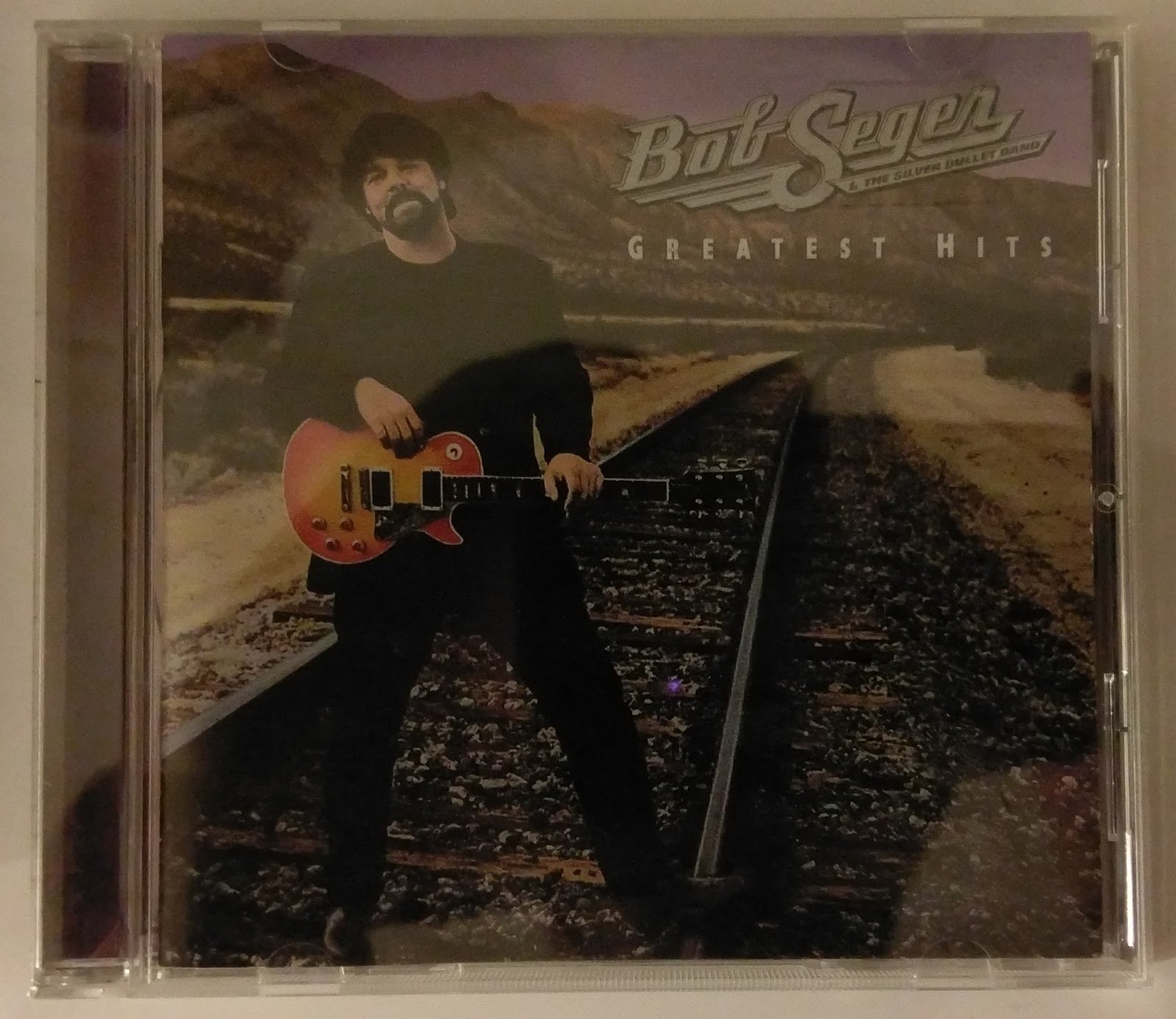
This is taken in Mojave, California. The mountains look similar to the mountains featured on the
1994 “Greatest Hits” album cover. They may be the same mountains as that album’s cover photo
was taken near Mojave. 


So that was my selection of American places connected with Bob Seger. I’d be interested in hearing
if you’re from any of the places featured here as well as anyone’s thoughts in general about this blog
post. America has given the world a great singer & songwriter in that of Bob Seger. 

Friday, 11 May 2018

The Making of Bob Seger's Stranger in Town - 40 Years On

This month marks the 40th anniversary of one of rock music’s iconic albums. The album is “Stranger
in Town” by Bob Seger & the Silver Bullet Band. This album was released 40 years ago on 5th May
1978. It was a huge success in the US where it got certified six times platinum 10 years ago when
the album was 30 years old. The album featured the hit songs “Old Time Rock & Roll”, “We’ve Got
Tonight”, “Hollywood Nights” and “Still The Same”. What made this album very special to me was its
strong melodies, powerful vocals by Bob Seger, the way it rocked, its very good production &
arrangements and its use of piano on all tracks giving that instrument a prominent place. I consider it
to be Bob Seger’s best album. This article is going to explore the making of the album in celebration
of its 40th anniversary featuring contributions from people who worked on it.  

Production
I’ll start off dealing with the production of the album. The songs on this album were recorded in two
groups. One group was songs recorded with Bob’s own band the Silver Bullet Band and the other
group was songs recorded with the Muscle Shoals Rhythm Section (a group of session musicians
based in the town of Muscle Shoals, Alabama). The tracks on the album recorded with the Silver
Bullet Band were produced by Bob Seger & his manager Punch Andrews and the tracks recorded
with the Muscle Shoals Rhythm Section were produced by Bob Seger & the Muscle Shoals Rhythm
Section.  

John Arrias, mixer and engineer on the album has this recollection of working on the song
“Hollywood Nights”: “One day while mixing songs at Cherokee Studios in Hollywood, Bob walked in
and said that he had sent for the Silver Bullet Band to come to the studio to record a new song he
had just written. The next day the band was in the studio, rehearsing. I was in the control room
mixing. Bob turned to me and said “Did you get that? No? Well you better get this one”. After
scrambling to set up mics and try and get a sound, I turned to the second engineer and said “Hit
Record”. The band played and I recorded the first take of “Hollywood Nights”. That was it. That’s the
take that was released. Bob then called fellow musician and member of the band Little Feat, Billy
Payne. That evening Billy came into Cherokee and put down his piano part. We mixed the song that
night, in 15 minutes.”

Bob Seger’s long-time engineer David Cole who first worked with him on the project has this to say
about Bob and his manager Punch’s collaboration as producers: “At the time, Bob’s manager,
Punch, was sharing production duties. They would often have opposing viewpoints on a song or a
take. Bob was the musician and performer and had his own vision for a recording. Punch had his
perspective as the super fan and had his own expectations. That lent itself to many “spirited
discussions”, to say the least. More than once, one of them would storm out of the control room
door.” John Arrias who shared mixing work with Bob and Punch describes the mixing process:
“Punch Andrews was the one we trusted to pick the best takes during the mixing of the album. Bob
and I would be at the console, mixing, and Punch would just stand there with his eyes closed and
grooving to the sounds. If he liked it he would turn to us and say. “That’s it”.”

David Hood, bassist of the Muscle Shoals Rhythm Section says the following about Bob’s production
and recording process: “Since the rhythm section was also co-producing the tracks, we spent extra
time helping Bob put the songs together. Even with that, we recorded the tracks very quickly,
sometimes five or six in a day. We would record all the songs that he had brought, then quite often
Bob would go back to Detroit and re-record the same songs with the Silver Bullet Band using the
arrangements we had worked out. Then he would pick the best version for the album. This meant
that both bands had probably played on all of the songs during the making of the album.”

Old Time Rock & Roll
The album features the hit “Old Time Rock & Roll” which ended up becoming one of Bob Seger’s
most famous songs. The song was written by George Jackson and Thomas Earl Jones. Bob re-
Roll” was recorded for our publishing company demo with the writer, George Jackson singing the
original version. George didn’t have a traditional “rock” voice so we overdubbed a young white singer
named Dennis Gulley on the track to give Bob the right idea about finishing the recording.”

Bob tried recording the song both with his band the Silver Bullet Band and with the Muscle Shoals
Rhythm Section, but it wasn’t working. Both David Hood and Forrest McDonald (guitarist on the
released version) pointed out that Bob was unable to re-create the same feel as the original demo.
As a result of this, he ended up using the demo of the song. The guitarist on the demo Forrest
McDonald who was not a member of the Muscle Shoals Rhythm Section, describes his participation
in the song: “In the late 1970s, a young man, originally from Austin, Texas, walked into Muscle
Shoals Sound Studio and told president/producer/engineer Jimmy Johnson that he was a guitar
player and wanted to play on sessions. Johnson, on a lark, told him to go out to his car (in which his
father, a University of Alabama constitutional scholar, and his stepmother sat in the heat without an
air conditioner), get his guitar and show what he could do. At the time, Johnson was cutting a demo
of George Jackson’s “Old Time Rock and Roll” and allowed the young man to sit in play fills and
even doing a guitar solo.” Forrest McDonald did not get credited for his contribution to the song until
its release on the successful 1994 “Greatest Hits” compilation. He adds “The upshot was Seger
bought that demo and it was used as the master with his vocals added and released by Capitol as a
single.” A saxophone part was also overdubbed which was played by Alto Reed, saxophonist of the
Silver Bullet Band. The overdubbed parts likely weren’t recorded at Muscle Shoals as David Hood
says “We weren’t there when they recorded Bob’s voice and Alto’s sax.”

Bob Seger’s Working Approach
David Cole has the following to say about Bob Seger’s working approach, “Seger’s method of
tracking with the band was to sing along with the take, an old school approach. This would inspire
and guide the musicians but also sometimes yield an awesome vocal take. Many times, they would
pick the take based on the vocal, despite errors in the band tracks. They would do take after take,
even after they had a good one, often just to see if there was another ounce of magic to be had.
Sometimes they would do takes at a slightly different tempo or key.” John Arrias says “Bob Seger is
a true talent. One day he turned to me and said, “That’s the worst mix I have ever heard”. That’s
when I said “OK, let’s start over”. Bob is a real feel guy, he knows what he likes and it’s up to the
engineer and producer to be his tools. I totally trust him. It’s his vision.” The approach of recording
songs with the Muscle Shoals Rhythm Section as described by David Hood is “Bob would book the
rhythm section and the studio several weeks in advance, usually after he had written enough songs
to record for the next album. We would start around one in the afternoon, take a dinner break around
seven in the evening. My role, of course, was to play the bass guitar.”

Outtakes
Regarding outtakes from this album, John Arrias says “we had many outtakes. The album has the
best.” David Cole mentions the title track which ended up becoming an outtake saying “I remember
working on the song, “Stranger in Town” but that it didn’t make the cut. The A&R guy on the project,
Carter, suggested using the song name as the album title, which they did.”

Important Points
David Cole began his lifelong career with Bob Seger that continues to the present day with this
album. He says “I started at Capitol in ‘76, right out of college. I quickly found my way into the
position of assistant engineer and that’s the role I played on “Stranger in Town”. John Arrias was the
engineer, an independent who had major artist credits. My job was to support the session anyway
possible: setting up mics, plugging in outboard gear, taking food orders... “whatever it takes”. It was
an awesome experience to see a classic album made firsthand.” He adds “I was literally just
assigned to the session. From then on, they would request me for their sessions. When the first
engineer was sick one day, they asked me to take over, which I did. In time, I would do some of the
sessions without John and eventually, I became the engineer. Because of my creative contributions,
they gave me “Associate Producer” credit on the “Like a Rock” album.”

David Hood who earlier pointed out how Bob Seger recorded the same songs with both the Muscle
Shoals Rhythm Section and the Silver Bullet Band says that it was only “after the album was
released that we would know which version made it. I can remember having to read the liner notes
to know I was on the record.” John Arrias says of the Muscle Shoals Rhythm Section “I did not travel
with Bob to Muscle Shoals but to this day I love the recordings that came out of that great studio.
Great musicianship.” I’ll conclude with Muscle Shoals Rhythm Section bassist David Hood’s words
on working with Bob Seger: “We are very proud of the music that we made with Bob Seger and are
pleased that it still makes people happy!”

I hope you enjoyed this look into the making of “Stranger in Town”. I wish Bob Seger would record
another album like this again, that is a melodic rock album using a lot of piano. Thank you very much
to David Cole, John Arrias, Forrest McDonald and David Hood for your contributions to this article.
You provided a unique insight into the making of this album. I hope that some of the outtakes from
this album will get released for the fans to enjoy. May this album continue to connect over the next
40 years and beyond with more recognition, sales and new fans.