Tuesday, 26 December 2017

The Case for Metric Land Measurements in Sri Lanka


Sri Lanka adopted the metric system in the 1970s, yet (with the exception of square kilometres) land
is usually measured the imperial way of square feet, perches, roods and acres instead of the metric
way of of square metres and hectares. In this article, I will say why I think Sri Lanka should use
metric units for land measurements giving its benefits. I will also give information on the sizes of
square metres & hectares and list the metric land sizes of famous landmarks in Sri Lanka.


Interrelatedness of Different Units
I’ll begin with the way the metric measurements relate to each other. The metric system uses units of
10, so the different metric units fit well together. There are 10,000 square metres in a hectare, 100
hectares in a square kilometre and a million square metres in a square kilometre. I’ll now show the
the same land size in different metric units. Let’s say there’s a land area equaling 68,000 square
metres. That land in hectares would be equal to 6.8 hectares. This is instantly converting from one
metric unit to another from just looking at it. It gets even better. An area of 365 hectares would equal
3.65 square kilometres or 3.65 million square metres.


The imperial measurements don’t have this nice blend of unity as there are 43,560 square feet in an
acre, 640 acres in a square mile and 27 million 878,400 square feet in a square mile. I will use
figures like I used for metric units to show the disconnect between imperial units unlike their metric
counterparts. A land area of 680,000 square feet (63,174.07 square metres) would equal 15.61
acres (6.31 hectares). An area of 950 acres (384.45 hectares) would equal 1.48 square miles (3.84
square kilometres) or 41 million 382,000 square feet (3.84 million square metres). Here’s an image I
created showing how the metric land measurements relate to each other. Feel free to use this
image.


Official Land Units
The official units for measuring land in Sri Lanka smaller than square kilometres aren’t the square
foot, perch, rood and acre, but the square metre and the hectare. Those responsible for Sri Lanka’s
metric conversion failed to educate the public on metric land sizes and metricate the real estate
sector. Thus, the real estate industry and media still use imperial units for land resulting in the public
thinking in these old units.


Imperial Land Units Bring Inconsistency
There is the issue of inconsistency resulting from referring to land measurements the imperial way.
We might think of a distance as 50 metres ahead, the building as 200 metres tall, but think of built-up
area in square feet. An example of this inconsistency in property listings is referring to a
house/apartment size in square feet and the distance to a road in metres. In reverse, we may think
of very large lands in square kilometres (such as the size of Colombo), yet think of lands smaller than
that as well as those in the square kilometre ranges in acres. Acres don’t neatly fit into square
kilometres as there are 247.1 acres in a square kilometre.

Opportunity for More Precise Land Measurements
Sri Lankan land sizes in square feet usually end in the neat number of 0, so may not be accurately
reflecting the size with a lot of rounding off. While the same practice can be done with square
metres, surveying in metric gives the opportunity to give more precise measurements with land sizes
rounded off to the nearest square metre. With this approach, a land size of 266.36 square metres
would be listed as 266 square metres and a land size of 457.73 square metres would be listed as
458 square metres.


Complexities of the Acre-Rood-Perch System
Regarding the perch unit, it’s actually a length measurement, with what we refer to a perch being
technically a square perch (25.29 square metres). The way it works is there’s a rod, pole or perch
that’s 5½ yards (5.03 metres) long. 40 perches equal a rood (1011.71 square metres) and 4 roods
equal an acre (4046.86 square metres). The rod (another name for the length perch) could get
confused with the rood. Also, someone surveying land in perches could get confused with the perch
for length and the perch for area. There are some instances of land sold in more than in one unit,
with it being sold in x roods and y perches or x acres, y roods and z perches. Having more than one
unit results in the consumer having to visualise the land in each unit adding unnecessary effort which
is much simpler in metric as it lists the land size in only one unit.  


Simplicity of Calculation
Most Sri Lankan house plans are in feet and inches. If you’re using square feet and you’re
calculating the amount of square feet in a room that has feet and inches (as opposed to just feet) on
one or both sides, it gets difficult to calculate as the amount of inches in a foot (12) isn’t decimal. If
you’re measuring square metres in a room that has one or both sides not being an exact metre, say
2.8 by 3.6 metres, you just multiply the two together which would equal 10.08 square metres or 10 square metres to round it off.


Synergy with the Construction Industry
Regarding house plans in feet and inches, I suspect that they are conversions from builders’ plans in
millimetres. Converting room dimensions from millimetres to feet and inches is a difficult exercise
that changes dimensions from a logical simple set of measurements into an uneven complicated set
of measurements. I think they should be converted to metres instead, which can be easily done by
just dividing the millimetre values by 1000. Doing so saves time and effort in converting figures for
the real estate professional or builder. Having the real estate industry using metric can prevent
difficulties coming up with the construction industry using metric and the real estate industry using imperial.


Fixing the Land Measurement Muddle
A land measurement muddle exists in Sri Lanka. An article or piece of text might have both square
feet and square metres, acres and hectares or kilograms per acre and kilograms per hectare in the
same document, paragraph or even sentence. Going back and forth between two units can result in
someone confusing a figure from one unit to the next. This sometimes results in someone writing a
metric value as an imperial one e.g. writing 30 hectares as 30 acres. Another cause of this is our
reluctance to think of land in metric. If someone mistakenly refers to a hectares value as an acres
value it gives the impression it's 2.47 times smaller, an acres value as a hectares value it gives the
impression it’s 2.47 times larger, a square feet value in square metres which gives the impression it’s
10.76 times larger, a square metres value in square feet which gives the impression it’s 10.76 times
smaller. Also, this land measurement muddle sometimes results in metric and imperial units of
different sizes put together, e.g. square feet and hectares.  


One Unit for Land & Living Area Instead of Two
Most Sri Lankan house property listings use perches for the land area and square feet for the living area. Having two different units for property does not show the difference between the land and living area clearly, with the easiest way to tell the difference being through conversions. This combination of units sometimes even hides errors such as the house size being listed as larger than the land size. It’s worth noting that these units are both imperial, yet the amount of square feet doesn’t neatly align with a perch, as there are 272.25 square feet in a perch. This shows a weakness of the imperial system, which puts a collection of many different units together as a system e.g. square feet doesn’t appear to be part of the acre-rood-perch system, but is dictated to be grouped together with perches as they are both imperial. When using square metres, it would be the same unit for both land area and living area which would easily reflect the difference between the two.


Tips for Visualising Metric Land Sizes
As we have been using our knowledge of kilometres to visualise square kilometres, we are also capable of using our knowledge of kilometres and metres to visualise square metres and hectares especially due to Sri Lankan road signs using metres and kilometres. Using square metres would match with seeing metres on road signs. A way we can think in square metres is to apply our knowledge of metres to building dimensions by thinking of the lengths of the wall (room dimensions) in metres instead of feet as well as picturing metres squared in the same way we picture kilometres squared.


A way to understand hectares is to think of square kilometres and think smaller. As 100 hectares is a
square kilometre, when it comes to land smaller than a 100 hectares, such as 65 hectares we can
think of that land as 65% of a square kilometre. For larger land we can divide it by 100 and then get
the value in square kilometres. The Sri Lankan agricultural industry is an industry that often uses
hectares, with many Sri Lankan tea plantations listing their land sizes in hectares. If you ever visit a
tea plantation in Sri Lanka that uses hectares, that can help you visualise hectares. Also, the total
land size of Independence Square is almost 1 hectare, so visiting Independence Square should give
you an idea on the size of a hectare. A hectare is an area of land covering 100 metres x 100
metres, so thinking of an area of land with 100 metres on both sides is another way to visualise
hectares.  


List of Sri Lankan Landmarks in Metric
Here is a list of Sri Lankan landmarks in metric sizes. The purpose of this list is to help Sri Lankans
understand and visualise metric land measurements and to positively affirm Sri Lanka’s status as a
metric country.


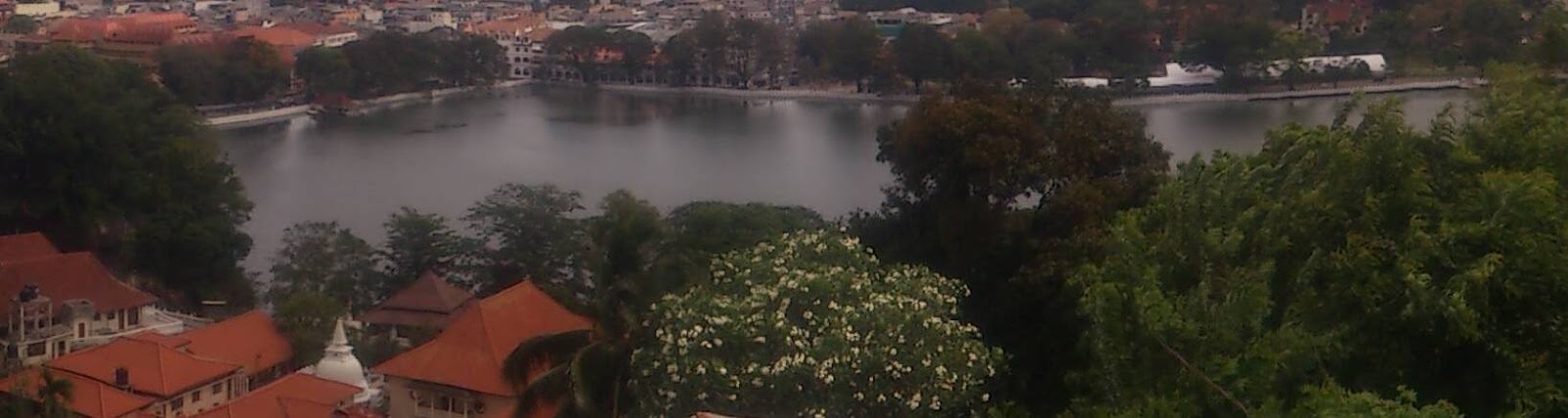
Kandy Lake, comprising an area of 19.01 hectares
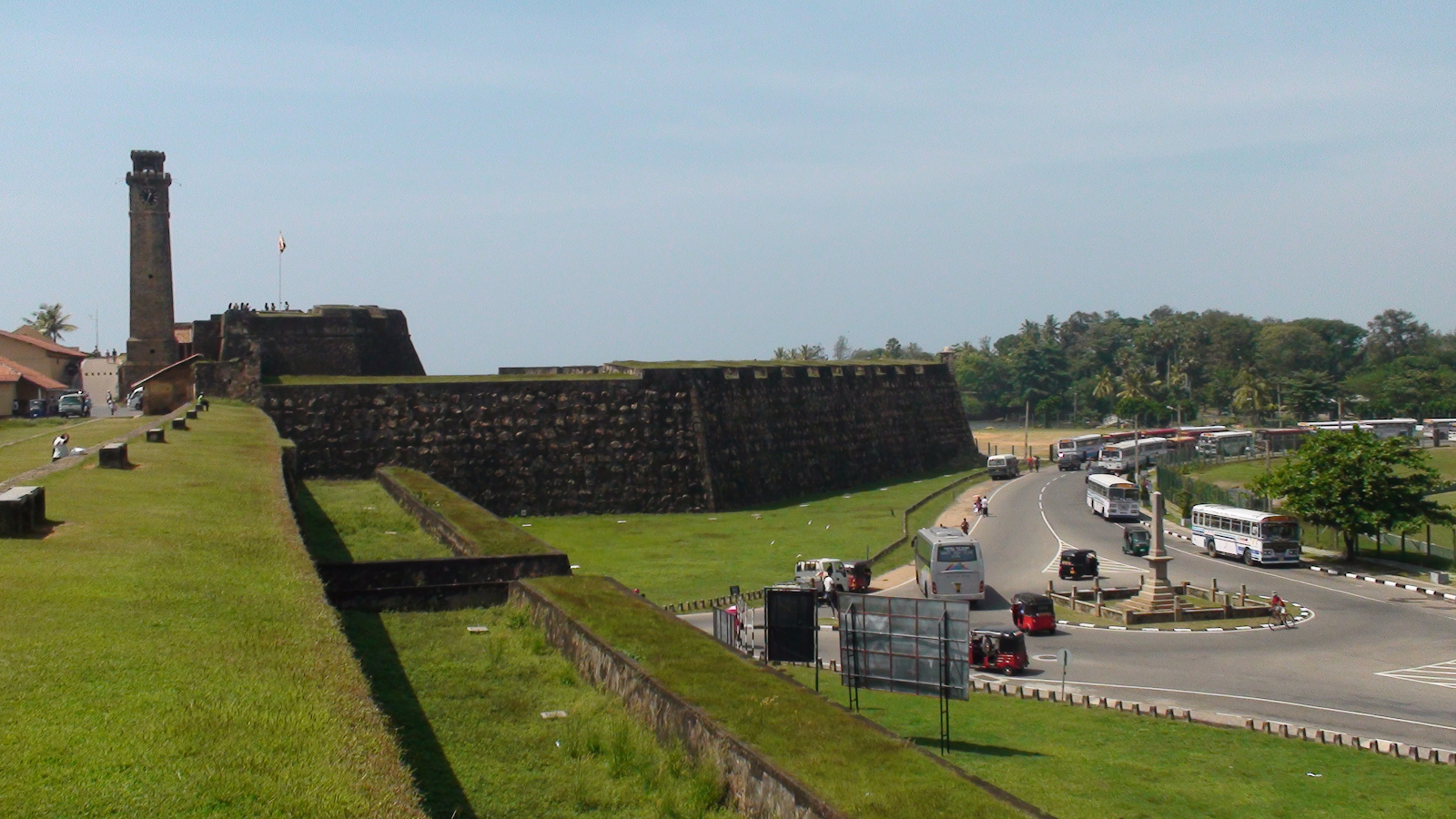

Galle Fort, comprising an area of 52 hectares


Landmark Independence Square is about 1 hectare in size


What You Can Do
These are some things you can do if you want to see Sri Lanka using metric land measurements:


  • Survey your house/land/business in metric if you don’t already know it, and tell people its size in metric when talking of its size.
  • Request a real estate provider (or anyone you're interested in buying land from) to sell land in metric telling them the benefits of it and point out that we’re a metric country.
  • Sell, rent or lease your property/business in metric units.
  • If you’re in real estate, have a planned conversion program of one or two years to convert your business to selling land in metric units where you educate your customers on the sizes of square metres and hectares.
  • Write an article calling for metric land measurements to be used in Sri Lanka.
  • If you’re a school teacher, teach your students to think in square metres and hectares.
  • Promote the use of metric land measurements on social media.
  • Start a Facebook group calling for metric land measurements to be used in Sri Lanka. 


Conclusion
The reason imperial units for land measurement got into our system is because we are a former
British colony who inherited the imperial system from the British. The metric system is something we
adopted ourselves unlike the imperial system that we got given to us by the British. Using metric
units for land measurement is easier to use than their imperial counterparts and it reflects our
independence thus it is true to our status as a metric country of 65,610 square kilometres.

Monday, 30 October 2017

Tracking Sri Lankan Judicial Cases


The Sri Lankan judiciary isn’t known for being fast and effective, with major issues being the long delays of cases and lack of convictions. Many cases drag on for years. It is reported that the average time taken from committing a crime to its high court judgement is 10.2 years. As a result of these issues, I think there should be a trilingual website that holds the Sri Lankan judiciary to account using information in the public domain similar to Manthri.lk by Verité Research that holds Sri Lankan parliamentarians to account. Websites and web pages holding the Sri Lankan government to account, have been increasing this year. Examples of this include the page tracking Sri Lanka’s Open Government Partnership commitments by Transparency International Sri Lanka, the Food Tax Tracker by Advocata Institute, a page on Manthri.lk tracking parliamentary election promises and the website Budget Promises by Verité Research that tracks Sri Lanka’s annual budget promises. A similar website for the Sri Lankan judiciary would add to the growing trend of Sri Lankan websites holding the government to account. I’ll now go into my ideas of how the site could function.

This site would have pages to give details of public interest cases such as cases of bribery and corruption. These pages would give summaries of what has been happening on the case with a link to news articles on the Internet for each point. The summaries could be the accused summoned to an anti-corruption agency, arrested, released on bail, indicted, called to court etc. If it’s possible and not too expensive, there could be an artificial intelligence (AI) component that goes through news stories from a list of sites and then sends the links to the team behind the site. The AI component would send the site team the list of articles from news sites, and the team would go through those articles and put the article or articles that they think is best suited on the case page. The team could also not post a single story from the AI suggestions if they find the AI suggestions to not give valid stories and they also could add stories on their own account if important news about the case has been breaking, but the AI is not picking this information up.


In additional to pages on public interest cases, there would be pages that offer general statistics on Sri Lanka’s judicial system. Those interested in Sri Lanka’s judicial system who look at both pages on public interest cases and general statistics can see if there are improvements or if things are getting worse. This opens the possibility for a wide range of analysis and observations of Sri Lanka’s judicial system. Trends could be spotted such as if certain cases take longer or are less likely to secure a prosecution. This site could also show if a case is progressing at a faster pace than expected.


Those in the government may look at the site, especially people working on court cases, which could result in them making improvements to the judicial system from seeing problems of the system displayed in the site.

If you think you are capable of creating or being involved in such a website, I encourage you to work towards making this site a reality. It will give Sri Lankans important information on the state of the judiciary. People will be able to look up cases they have an interest in, find out important information about the state of the judiciary & draw conclusions and the site’s existence brings about the possibility of a better judicial system for Sri Lanka.

Thursday, 26 October 2017

If Tintin Were Set in The Present Day

Tintin is one of the most iconic comic book characters in the world. His adventures existed in the 20th century from the 1920s to the 1970s (or 1980s if you count the unfinished adventure Tintin and Alph-Art). I thought it would be interesting to write down ideas that could be explored in Tintin if there were Tintin adventures set in the present day. In this article, I am giving a list of what I’d like to see in present day Tintin. While most ideas are specifically related to the present day, there are a few that are simply things we haven’t seen before in Tintin I’d like to see. Let’s begin.


DSC_0358.jpg


  • Have Professor Calculus invent green technology, and not as a joke, but as cool useful technology that actually works especially with the environmental issues we’re currently facing.
  • Tintin has had science fiction stories and elements, so have a science fiction story. It could be based on an invention of Professor Calculus or deal with issues of artificial intelligence.  
  • Have an adventure where Tintin, Captain Haddock and Snowy take on ISIS in the Middle East. It could be tied to the state of Wadesdah (a fictional country run by the heroes’ friend Emir Mohammed Ben Kalish Ezab).
  • If there’s a way to deal with it, feature the contemporary problem of racism and hatred in some of the stories, e.g. it could be with Syldavia (a fictional country in Tintin) electing a populist leader.
  • Syldavia is enemies with their neighbouring state (also fictional) Borduria. Borduria is an aggressive state and they have the dictator Marshal Kurvi-Tasch who’s mentioned but only appears in photographs. Have the Bordurian leader Kurvi-Tasch appear and be the main villain of the story.
  • Have a story dealing with cyber crime.
  • Bring the Panama Papers into Tintin, and have some Tintin villains being part of it.
  • Have a story dealing with automation.
  • I did say to have a science fiction story, but I would like to see another specialised form of science fiction, which is time travel. Have a story where the heroes go back in time to an incident involving Captain Haddock when he was much younger with Captain Haddock avoiding contact with his younger self. Show the contrast between the two of them and the story would involve the heroes stopping the villains from altering history. Differentiate the two Captains by making the younger Captain Haddock without a beard.
  • I would like to see a subplot in a story of insurance agent Jolyon Wagg suffering due to the annoying things he’s done to Captain Haddock.
  • Captain Haddock’s Butler Nestor is very formal and we see little of what he’s really like as a person. Reveal what he’s really like by showing him interact with others casually, and possibly have his interactions with the heroes getting less formal. There could be a story of Nestor getting kidnapped with the heroes going to rescue him. That would give the opportunity to delve into his personality.
  • Incorporate drones (the type that take videos and photos) into a story.

I hope you enjoyed my list of what I’d like to see in present day Tintin. I’d be interested to hear what your thoughts are on these ideas, if you have any expansions of them or if you have ideas of your own.

Friday, 29 September 2017

Ten Classic Rock Songs for Bob Seger to Record


In this article I’m listing ten classic rock songs that I think would be good choices to be covered by Bob Seger who I’m a fan of. The songs will be listed in the order of their release date. I’ll explain how his version of the song could go. Most of the artists are well-known, but some of the songs here are less famous. Bob has recorded songs both with his band the Silver Bullet Band and solo, so I will be making reference to the Silver Bullet Band in most cases. I’ll be listing the songs in the order of their release date and will be giving a list of musicians who would play on the song for some of them. Here’s my list.


Wild World - Cat Stevens (1970)
This song is chosen as it sounds like Bob Seger’s hit “Still The Same” having a similar set of instruments and even a short piano solo like “Still The Same”. On “Still The Same”, Bob played piano & acoustic guitars, and the impression I get is that Cat Stevens played those same set of instruments on “Wild World”. On this version, Bob would play piano & acoustic guitars. I don’t think the original version has an organ, and this version would have an organ that’s clearly audible similar to the one in “Still The Same”. This version would sound more like his song “Still The Same”. Here is a list of musicians that could play on it with the drummer being the only non-Silver Bullet Band musician.


Bob Seger - Vocal, Piano, Acoustic Guitars
Craig Frost - Organ
Chris Campbell - Bass
Russ Kunkel - Drums


Bad, Bad Leroy Brown - Jim Croce (1973)
I chose this song as it sounds a bit like Bob Seger and it’s melodic with great piano played in it. This version would have the addition of organ played by Silver Bullet Band keyboardist Craig Frost. Here is what I see as the line-up for the song.


Bob Seger - Vocal, Acoustic Guitar
Bill Payne - Piano
Craig Frost - Organ
Chris Campbell - Bass
Russ Kunkel - Drums


Ridin The Storm Out - REO Speedwagon (1973)
This is an old REO Speedwagon song from 1973 with Mike Murphy on lead vocals. The keyboards on the original are piano and synthesizer which were played by REO’s keyboardist Neil Doughty. Bob Seger’s version would have the addition of an organ. The original opens with a synthesizer effect followed by the guitars. In this version the organ would start when the guitars start. Original Silver Bullet Band guitarist Drew Abbott would come back for this song as I see similarities between the song’s guitar parts played by Gary Richrath and Drew’s playing.


Two Tickets to Paradise - Eddie Money (1977)
The type of signing that Eddie Money does on this song would suit Bob Seger’s singing and be even more powerful with his voice. It’s also a melodic rock song with piano which fits Bob Seger. I also envision original Silver Bullet Band guitarist Drew Abbott coming back for this song.


Lights - Journey (1978)
This is a great song due to its melody, piano, guitar, organ and powerful singing. This version would sound fantastic sung with Bob Seger’s powerful voice. I’d like to see Bob play more rock songs on the piano, and am envisioning him play piano on this song as its piano rocks well, but isn’t complicated.


What a Fool Believes - The Doobie Brothers (1978)
This version would really rock unlike the original. It would start off with the piano and then be joined by rocking guitars that replace the synths of the original. It would sound more like Bob Seger’s own song Sunspot Baby. The guitar solo that The Doobie Brothers have done in live versions would be used in the song and this version would have organ as well. As this is a rock version of the original, even the piano would be redone in a rock way.


Breakdown Dead Ahead - Boz Scaggs (1980)
Boz Scaggs has a high voice, and Bob Seger would sing this song quite different to the original. He would sing the song in his deep voice. This version would have organ as well.


Make Believe - Toto (1982)
I already envisioned Bob Seger covering a Toto song before in my post ‘Toto Tribute Album’ where I wrote of an imaginary Toto tribute album by big names in classic rock and even assigned another artist to this song there. However, I chose this as it has a saxophone (an instrument used a lot in Bob’s music) and also has some similarities to his 1982 hit song “Even Now” which is my favourite Bob Seger song. Both songs were produced in the same year, and this version would sound more like “Even Now”. The saxophone would be played by Silver Bullet Band saxophonist Alto Reed.


If This Is It - Huey Lewis and The News (1983)
I’m imagining this version sounding more like a track off Bob Seger’s album ‘Stranger In Town’ using that album’s arrangement style. This cover would sound more like his song “Till It Shines” off that album.


The Way It Is - Bruce Hornsby & the Range (1986)
This version wouldn’t have the drum machines and synthesizers of the original replacing them with real drums and organ. I envision Bob making it sound more like his own song “The Fire Inside” and the musicians I’ve listed for playing this song feature pianist Roy Bittan, Silver Bullet bassist Chris Campbell and drummer Russ Kunkel who played on “The Fire Inside” song. The song’s intro would just be piano, then it gets joined by the drums at the same point as the original and the other instruments would join in. Bob would play an electric guitar which would have a rockier tone than the original and have a bit more prominent role in this version. Bob’s voice and singing style is quite different to Bruce Hornsby’s thus he’d sing it differently to Bruce in a louder way using the powerful qualities of his voice.


Bob Seger - Vocal, Guitar
Roy Bittan - Piano
Craig Frost - Organ
Chris Campbell - Bass
Russ Kunkel - Drums


That was my list of classic rock songs that I think would be good for Bob Seger to record. You might have noticed similarities between these songs and I hope you thought they suited Bob Seger. If you liked this article you might also like a previous Bob Seger article of mine ‘Ten Great Bob Seger Songs by Ten Different Piano Players’.

Sunday, 20 August 2017

Positive Occurrences Over The Last Three Months in Sri Lanka

When it comes to the recent state of events in Sri Lanka, especially relating to politics, there has been a lot of talk of negative issues. Recent issues include the constant strikes burdening the public, the garbage problem, the threat of dengue and economic issues that include the cost of living & the debt repayment Sri Lanka is going through. I’m writing this article to point out that while there are negative issues occurring, there are also positive ones. I’ve seen what appears to be an increase of positive incidents in Sri Lanka politically over the last three months and will be listing some of them.


GSP+
Firstly, in May Sri Lanka regained the European Union’s (EU) service of GSP+. GSP+ is a trade service given to developing countries for full removal of tariffs regarding all products covered under the product categories of the GSP service that has less benefits. We earlier had this service, but it was suspended by the EU in 2010. The EU is Sri Lanka’s biggest export market and this gives a much needed boost to our exports which hasn’t been performing great recently. GSP+ enables Sri Lanka to increase and diversify its exports. Sri Lanka began receiving the benefits of this service on the 19th of May.


Cabinet Reshuffle
Shortly afterwards there was a cabinet reshuffle that occurred on the 22nd of May with more changes made a bit later. I think positive changes were made when it came to economic affairs. I thought making Mangala Samaraweera Finance Minister was a good decision as I consider him to be a better Minister than his predecessor. There were further changes made to portfolios on the 31st of May, and I’ll be referring to what I see as two positive economic changes from that. Eran Wickramaratne being appointed as State Minister of Finance was very good as it’s an area he's an expert in due to his banking career and having studied Economics at the University of London. Dr. Harsha De Silva was given the portfolio of Deputy Minister of National Policies and Economic Affairs which gives him a chance to work in his field being an economist. These three men have the potential to turn around the Sri Lankan economy, especially as the last two are of a higher quality than the average politician.


Rajagiriya Flyover
There is a Rajagiriya flyover being constructed right now to improve the traffic congestion currently faced in Rajagiriya. It was originally scheduled to be completed in December 2018, but Deputy Minister of National Policies and Economic Affairs Dr. Harsha De Silva revealed at the site in June this year that the project is being expedited for completion by December 2017.


Banning of Bottom Trawling
A destructive form of fishing called bottom trawling is practiced by both Sri Lankan and Indian fisherman, with fishermen from India being the strongest offenders of this issue in Sri Lankan waters. On the 6th of July, Bottom Trawling and other illegal fishing activities was banned with the passing of a bill in Parliament. This was a good move for environmental reasons and it helps Northern fisherman as bottom trawling is part of the problem of Indian fisherman violating Sri Lanka’s sovereignty by fishing in Sri Lankan waters.


Sri Lanka Customs Online Payment Platform
On the 20th of July, an online payment platform for customs declarations was launched in Sri Lanka. It’s called LankaPay Online Payment Platform done in partnership between Sri Lanka Customs and the Central Bank of Sri Lanka. This digital system greatly improves the efficiency of Customs payments, especially for exporters/importers.They previously could only make direct Customs payments online via two state banks, but now can make direct Customs payments online via any bank. This system is implemented under the guidance of State Minister of Finance Eran Wickramaratne.   


New Economic Advisers
In July, there were the appointments of two well regarded Sri Lankan economists as advisers to the Finance Ministry. Firstly, Deshal De Mel who works as a Senior Economist at Hayleys Group was appointed as an Economic Adviser to the Ministry of Finance. Secondly, Professor Razeen Sally based in Singapore who is the Chairman of the Institute of Policy Studies was appointed as a Senior Adviser to Finance Minister Mangala Samaraweera. Both these two individuals have been giving their criticisms of Sri Lankan government policy, especially relating to the economy. They in fact both gave lectures with their criticisms at Public Policy Think Tank Advocata Institute last year being ‘What’s wrong with Sri Lanka’s economy?’ by Deshal De Mel and ‘Sri Lanka: Three Scenarios For the Future’ by Razeen Sally. While I wouldn’t go as far as they did in some of their criticisms, the fact that these two men who have major criticisms of Sri Lanka’s economic policy are working for the Finance Ministry as Economic Advisers show that the new leadership at the Finance Ministry is not appointing yes-men, but intelligent economists who have good ideas of what should be done instead. Hopefully, their input will be able to reduce the negative economic policies and bring about an increase of positive economic policies.


Passing of the Foreign Exchange Control Bill
On the 25th of July, Parliament passed the Foreign Exchange Control Bill which is a reform improving the status of foreign exchange in Sri Lanka. The voting of this bill used the electronic voting machine for the first time in Parliament. Voting this way is more efficient and allows for better tracking of the MPs votes.


Government Action on Strikes
As I mentioned at the start of this article, a problem currently going on in Sri Lanka are the constant strikes that cause difficulty to the public. A problem has been the government’s policies regarding these strikes including their lack of action to prevent these frequent occurrences. On the week beginning Monday 24th July, workers of the Ceylon Petroleum Corporation went on strike. On Tuesday 25th July, the government declared in a Gazette under the Essential Services Public Act of the storage, transport & distribution of petrol being mandatory and that anyone who fails to report to work will get terminated from service. On Wednesday the 26th of July, the Sri Lanka Army was brought in to distribute fuel. Hopefully this response by the government is a sign that they’ll respond better to strikes and take action to prevent ones from happening in the future. It’s worth noting that early this month, UNP MP Mohamed Mujibur Rahman called for new laws and regulations to address the strikes issue.


Hambantota Port Lease
On the 29th of July, Sri Lanka signed a signed an agreement with Chinese State Entity China Merchant Port Holdings to lease the Hambantota Port. I’m aware that this deal is unpopular with some saying we are selling out to China. Some aspects of the deal may not be the best for Sri Lanka, but I think that it was a good decision that needed to be made. Sri Lanka is facing a massive debt crisis, and this payment eases that as it’s bringing in US $1.12 billion which is a massive amount of money. The sale also is beneficial as the Hambantota Port was a loss making institution bringing economic damage to the country. Hopefully, China Merchant Port Holdings will make the Port profitable and there will be a creation of Sri Lankan jobs as well. It’s also worth noting that this isn’t a sale, but a lease and that it’s a Public Private Partnership with Sri Lanka still having a stake. The agreement gives China Merchant Port Holdings a 70 percent stake and Sri Lanka a 30 percent stake. Dr. Parakrama Dissanayake, Sri Lanka Ports Authority Chairman, said on the 31st July episode of the political talk show Face The Nation that this is the largest FDI we have ever received at US $1.12 billion. Sri Lanka hasn’t been having enough FDI coming in, so it’s very good to see FDI of that scale coming to Sri Lanka.


Action Against Bribery
A form of local government in Sri Lanka is the Pradeshiya Sabha. On the third of August, Ranil Madawa Kamal Nilame a former Rambewa Pradeshiya Sabha Chairman got sentenced to five years in jail as well as a Rs. 40, 000 fine for soliciting and accepting a bribe over a youth who was seeking employment in Korea. This incident occurred 10 years ago in 2007, so it reveals the broken legal system we have in Sri Lanka where things take far too long. However, it’s good to see a government official being sentenced for bribery based on efforts by the Commission to Investigate Allegations of Bribery or Corruption (CIABOC). It’s interesting to note that on the 16th this month another former Pradeshiya Sabha (Tangalle) Chairman was arrested for allegedly accepting a bribe. It’s possible that CIABOC is functioning with some improvement due to these instances. Let’s hope they’ll continue to get more efficient and will work hard so that in the not too distant future they’ll make arrests and actually deliver the much needed prosecutions for the figures said to be involved in bribery and corruption of the previous government.


Waste-To-Energy Power Plants
On the 10th of August, two solid waste-to-energy power plants began construction as Public Private Partnerships. These projects are led by the Ministry of Megapolis and Western Development and will be bringing in US $193 million in FDI. The plants will convert the waste generated in Colombo and Gampaha into energy. This project is a double achievement for Sri Lanka as it will help solve the garbage problem Sri Lanka is currently facing as well as bring in the much needed FDI. There is also going to be a third project of this sort commencing soon bringing in an investment of US $91 million.


Road Discipline
There are positive moves taken regarding road discipline. On the 11th this month, the Cabinet of Sri Lanka had made important decisions regarding traffic. They had approved increased fines for issues that include driving under the influence of drugs or alcohol, entering irresponsibly into a railway crossing, driving without an authentic licence and driving without proper insurance among others. The Cabinet also decided to install CCTV cameras near areas prone to accidents and use them to identify and punish those guilty of offences. Also, earlier this month the Ministry of Megapolis and Western Development announced that they’ll implement priority bus lanes in Colombo and its suburbs to ease traffic congestion. The first phase of implementation began on Tuesday the 15th of August, with there being further implementations over the next four weeks each week as well as another priority lane to be implemented on the 30th of November.   


Inland Revenue Bill
A new Inland Revenue Bill is being discussed right now with the intention of passing it in Parliament before the end of this month. Finance Minister Mangala Samaraweera mentioned that in Sri Lanka indirect taxes currently account for 80 percent of tax revenue with 20 percent accounting for direct taxes. It is important to note that this figure is actually higher as economist Jayani Ratnayake said in an 18th August interview on Biz1st Review 360 that indirect taxes accounted for 83 percent of tax revenue in 2016. The Minister noted that this law is the first step of reducing indirect taxes to 60 percent and increasing direct taxes to 40 percent. This should benefit low income earners. Another objective of this bill is to create an investor friendly environment by simplifying the tax structure to attract more FDI. This bill is also brought to deal with the problem of tax evasion. The Finance Ministry has been having discussions with stakeholders on this bill. On the 18th of August, Minister Samaraweera stated that the Inland Revenue Bill will be presented to Parliament the following week and that the bill will be passed by the 25th of August. He also stated that most of the concerns raised regarding this bill will be addressed.


Conclusion
An issue I’ve had with this government was their slow pace of reforms, especially as they were elected on a reformist agenda. Thus, it’s a positive sign to see more reforms recently with the banning of bottom trawling, the passing of the Foreign Exchange Control Bill and the likely passing of the new Inland Revenue Bill. The Inland Revenue Bill appears to be the only major reform of the three reforms, and unlike the first two ones hasn’t been passed yet. This could be a sign of faster reforms, and it would be good to see other major reforms along the lines of the Inland Revenue Bill being passed before the end of the year.


I see a real improvement in the Finance Ministry following the new leadership of Mangala Samaraweera and Eran Wickramaratne. They got to work since leading the Finance Ministry and have been consulting with the relevant stakeholders to help them carry out their roles well. It’s likely that the benefits of some of these occurrences will be felt over the remaining course of the year.

Friday, 14 July 2017

Bob Seger Pinball Game

Image Courtesy BobSeger.com (bobseger.com/pinball)

I’m writing this post about an online pinball game recently released. The game came out in June 2017 to celebrate Bob Seger’s music joining music streaming services. It is a Bob Seger Pinball Game hosted on his Official Site.

When it comes to simple online games I usually find them fun, but rarely play them as gaming isn’t an interest of mine. However, a game such as this based on one of my favourite singers drew me in. It was a special experience to see an online game featuring Bob Seger graphics.

I’m aiming to give exposure to this game and by extension Bob Seger’s music. I hope that it will continue to be played by both Bob Seger fans and others, especially those into online games. I’m hoping someone who isn’t familiar with Bob Seger’s music who enjoys playing this game, will get curious about Bob Seger’s music and can discover his music via the selection currently available in streaming services. The game page (bobseger.com/pinball) has the ‘Bob Seger Best Of’ Playlist on Spotify that people can listen to. The playlist features my favourite Bob Seger song, the overlooked ‘Even Now’ which was a Number 12 US hit in 1983.   

I’d be interested to hear if you’re someone who discovered or re-discovered Bob Seger's music through this game and songs of his you enjoy listening to. I thought I’d say that as of this writing, my name is at Number 9 on the Scoreboard. This game is challenging, but fun. Enjoy playing Bob Seger Pinball!