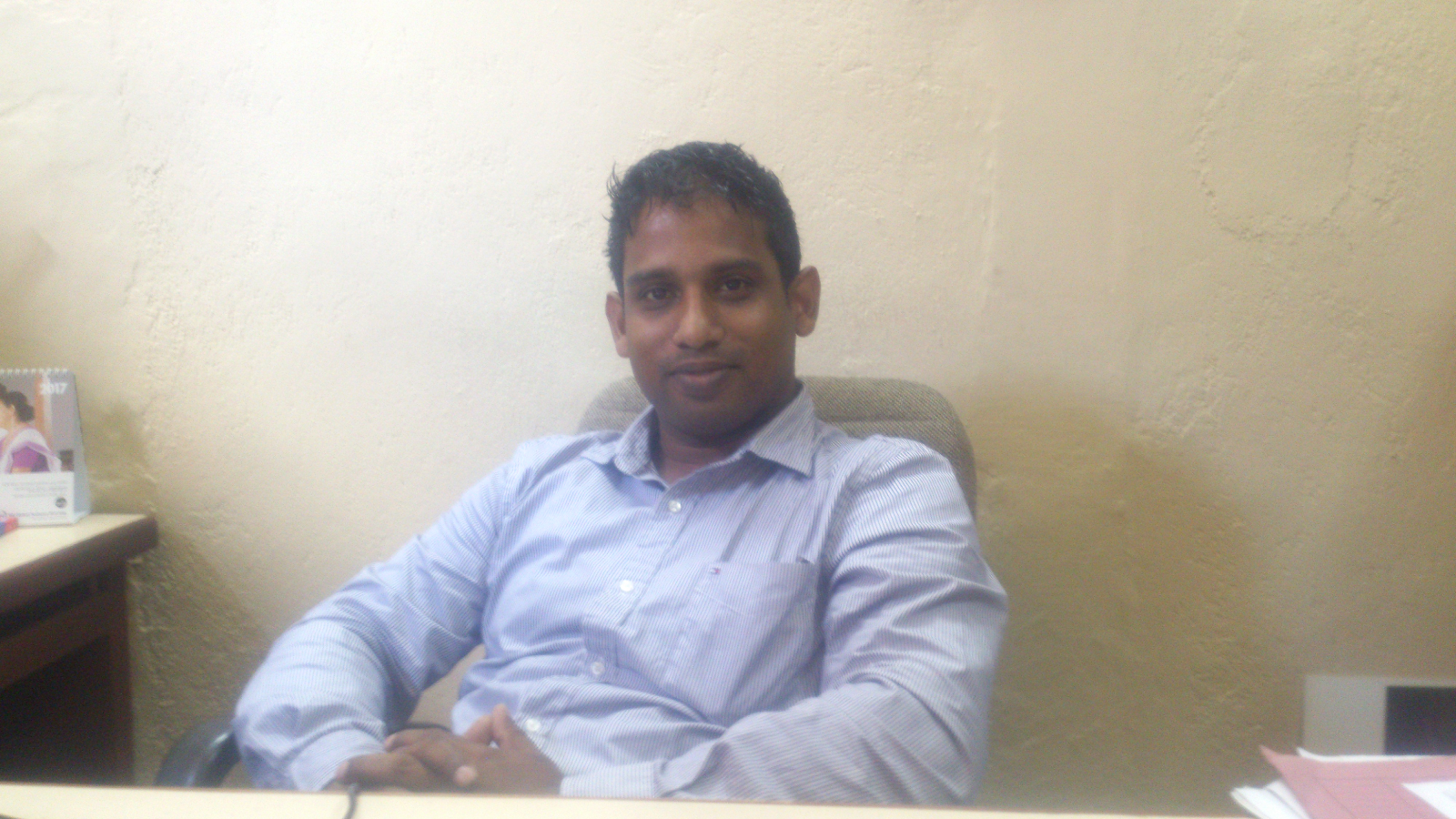
Welcome to my interview with Dr. Dimantha De Silva, the Consultant/Team Leader of the Transport Plan for the Colombo Western Region Megapolis Planning Project (CWRMPP). The Megapolis is a massive project that seeks to improve the quality of the Western Region of Sri Lanka which includes Colombo. The Colombo Transport Plan includes improved roads, monitoring by CCTV cameras, increasing average travel speed, an inland water transport system, a modern bus service, an electrified rail system and a Light Rail Transit (LRT) system. I talked to Dr. Dimantha De Silva about a variety of aspects of the Colombo Transport Plan. Hope you find it informing and interesting.
1. What is your role in the transport team of the Megapolis?
I’m a consultant, so I was initially consulted to build the Transport Master Plan of the Western Region. We took about 4 - 6 months to do the Master Plan. Afterwards, I was retained as a consultant to the Transport Unit of the Western Region Megapolis Planning Project to oversee the implementation of it as well and I still continue with the project. I co-ordinate with the Ministry to implement what we have outlined on the Master Plan and to get it off the ground.
2. What are the biggest challenges facing the transport team?
I think the challenge is the lack of authority. The Megapolis doesn't have the authority to implement the projects because it still lies with the different agencies. For example, all the road projects have to be done by the RDA [Road Development Authority], all the railway projects have to be done by the Transport Ministry and so with the Railway Authority. Then when you take the buses, there are multiple agencies for the Western region. There is the Western Province Transport Authority. When it comes to inter-province, it is the National Transport Commission, and when it comes to the CTB, it’s the Sri Lanka Transport Board, So, there are multiple agencies that are working separately on each of these interventions. The challenge then for the team has been to co-ordinate with everybody and we have done it to a certain extent. But still, since we don’t have the full authority, that is, I would say would be the biggest challenge.
3. How can your experience in Canada help you in this project?
I lived in Canada for 11 years. The initial part of that was for my PhD and the second part was doing some consultancy work in Canada. My work was in Canada and US mainly. It allowed me to interact with the world’s best transport planners and also to experience the transport systems in the World, not only in Canada but also in the US, in Australia and in the UK where I also got the opportunity to travel.
By working with all these policymakers, in different agencies that I worked with as a consultant, I had the opportunity to see how things were implemented, and to know the overall picture and the overall strategies we needed to solve a transportation problem. The other thing is about the new technologies available. It is very important that we don’t stick on one type of thinking and basically use only that thinking. We need to move on with the new technologies that are coming up and move onto the next generation of ideas as well.
So I feel that my experience in Canada helped a lot to apply to the experiences here and also gave the confidence to the Government sector as well. These are the things that have been carried out in other parts of the world. These are things that could be done and not just based on theory but based on practical applications elsewhere. Because of course, practicality is important. If there can be a technology that has been proposed but if it practically cannot be implemented, those kind of technologies should not be even considered beyond pre-feasibility level. We are spending money on doing the studies and only identifying what can or cannot be done on the ground later on.
4. I heard that you have received a loan from the Japan International Cooperation Agency (JICA) for the initial phase of the Light Rail Transit (LRT) system. How long does Sri Lanka have to pay back the loan?
For this we have 7 lines, so I will tell you a little bit of a broader picture. This Master Plan has identified that we will need to go for a Network solution. In that Network solution, we have identified the LRT network has to be up to about 75 km and based on that, we have identified 2 lines to be prioritised. It is from Malabe connecting the Malabe section to the Parliament corridor or the Malabe corridor to Fort. That is the only transport corridor that doesn’t have a rail option. All the other corridors will have a rail option. So based on that when it was prioritised, JICA came up. They showed interest because in 2014 they had done a study, and a feasibility study before that, for a Monorail system. Now the technology has changed, because we have decided that LRT is the better option where we are going for a Network solution, rather than the Monorail.
Based on that, we identified JICA who expressed interest to potentially fund this project. This cost about 1.25 billion US dollars. Now the question you asked is how long do we have to pay back the loan. This loan is what we call a step loan. A step loan is a very concessionary loan - very low interest and if you look at the rate, it’s 0.1% interest for 40 years and with 10 year grace. So it is basically free money.
So let’s look at it this way. We have a problem on our hands. We need the transportation infrastructure to be built, but we don’t have the money. We need it to solve our transportation problem, we need it to elevate our economic levels, but we don’t have money. So we definitely have to go for loans. So it’s kind of a chicken and egg situation. Do we find other means of investment, other means of money sources, and then use that money for transport or do we build the transport system that is required for the economic elevation and then we pay if off. The advantage of this loan is, it is for 40 years, which is a long term loan. And it is a 0.1% interest and includes a 10 year grace period. Grace means you only start paying it after the loan has been given to you. So, there is a construction period. A portion of it will be used for the construction. But, effectively, we start paying the loan back 10 years after the construction of the LRT. So we have time to elevate our economic levels. It is only then, that we start paying. By that time, we would have increased our economic level. Second thing is, this loan is not available after we graduate for upper middle income level. Once we graduate above the current level, we are not eligible for these step loans. So, now we are tapping that source which will not be available probably in 1 and a ½ years time.
5. How do you expect to get money for the rest of the transport project?
Good question. If you look at the main solutions: Railway, LRT, Inland Water Transport and Buses - Traffic Management is the main thing if you take the flux of the solutions that we have talked about. So, for LRT, the initial part is JICA which will cover 1.25 billion out of 3.5 billion or so US dollars total. 1.25 billion is potentially by JICA. Why I say potentially is they still need to do the feasibility study. Once that is done, and only then, would the loan be confirmed. But in principle they have agreed to it.
The ADB [Asian Development Bank] has already approved a loan for the railway. It is for modernisation and electrification, and the feasibility study is ongoing with that as well. Up to 900 million US dollars has been approved by them. The question is whether we can keep on investing and getting loans. So the government is looking to get the public sector involved. The public sector will need to be involved.
Now for the LRT project itself, in parallel to JICA funding 2 lines, we have floated an expression of interest for people to come up with proposals to build the next 5 lines. We are not going to build all 5 lines together, because it doesn't make sense to do that, but most probably we will prioritise 2 lines, that are most potential for our network to go with a PPP (Public Private Partnership) arrangement. So we have to look at how we are going to pay the gap. Is it via real estate? Is it by means of a ridership guarantee? Or is it in means of other types of projects that are involved with the Megapolis? We are trying to get the public sector involved to bring up money not only from Sri Lanka but from foreign investors as well.
6. I’m aware that the Cabinet of Sri Lanka has approved the LRT. Have they approved the rest of the Transport Plan?
Yes, so there was a Cabinet paper outlining and summarising what the Transport Master Plan is, and it has been approved in principle. And also, the Cabinet has appointed 3 Secretaries for the Minister of Transport, Minister of Highways and Minister of Megapolis. The Secretary of the Ministry of Megapolis is the chair for this 3 Secretaries Committee. They are going to make the decisions on the long term capital intensive projects and then make decisions on the Master Plan. You need to send individual Cabinet papers for these projects separately, but in principle the Master Plan has been approved by the Cabinet, but without many details in it, it's just an idea of what we are going to do. But for each individual project you need to have Cabinet approval. So, yes the Cabinet has approved it in principle, but it is being further evaluated by the 3 Secretaries. Individual Cabinet papers will go out for each individual project. Several Cabinet papers on the Master Plan have already gone for approval and sometimes for things which are not in the Master Plan as well. But the Cabinet in general has supported all the transport projects.
7. When do you expect construction to begin?
A lot of it has already started. We need to have a lot of things happening in the background. Let’s say the studies that were necessary to commence construction was not there. There are two ways of doing it. You could go and build right away without due diligence. And then, we’ll find out whether we are taking the right decision. Does the Government know what is the exact construction cost? We will find later on that there won’t be any people to use this infrastructure. So to some extent we have seen some of these transport infrastructure that has been built recently. It is probably not that the transportation infrastructure is not generating people or generating the demand. It may be because the supporting things are not there. For example, take the airport, Mattala Airport. I don’t want to go into detail whether the location is correct or not. But definitely we need a second airport. So, the question is whether sufficient studies has been done to identify whether the location was correct or not.
Third thing is whether the surrounding resources are there to supplement it. Whether the hotel facilities are there and other utilities required are there. So that is why it is important that we actually do our studies first to identify the shortcomings. Then we could solve our problems. So the construction is going to take some time. You have heard of the bigger construction projects. But for the road construction, the expressways are going ahead. If you look at the construction of expressways, it is happening. The reason is not because of any political movement I would say. It is because there have been enough studies, enough work done by the Road Development Authority on this regard.
If you take the Southern Expressway, or if you take the Outer Circular Road, these are not things that have been done in the last 5 to 10 years. This has been done 20 years back. It started 20 years back - some of these outer circular roads was in the plans since 1980’s, ‘80 - ‘85 probably. As enough work has been done, it is easy to go on to the construction stage. Now for the current projects, construction has not started. So we have talked about the LRT since 15 - 20 years back. We have just talked. The planners or the transport experts have just neglected that part. We need these transportation infrastructure to come now. Not in another 5 years. Actually we should have had the LRT running right now. And it is the transport experts who should be blamed for this because it is not on the ground.
So the construction is not happening right now. It won’t probably happen for another 2 and a ½ years. Mainly for LRT. So it is up to us to expedite the process to get it on the ground as quickly as possible. The feasibility study is going to take a minimum of 1 year. So February 2018 is the target for completing the LRT feasibility study for JICA. Then you need to have further steps. So I would say another 2 years before we can even start construction.
8. How can this project improve the day to day life of Sri Lankans?
It’s all about the connectivity and options. If you look at the whole Transport Master Plan, it’s not only one mode, it’s a collection of transport modes. And it’s not only on public transport, it is also about private vehicles as well. Because it covers the taxis, it covers the buses, it covers the LRT, it covers the railway, it covers the roads and also the traffic management side of signal lights intersection. It covers changing the behaviour of people, like flexible work hours, if you change the work hours, you will allow people to have a choice. So I feel that when you give more choice to the people, happier they will be. So you can’t constrain the people, and you can’t say you are going to provide improved bus services only or only improve the LRT or only improve the railway. You need to provide connectivity for people through cars as well. So for example, some people will never move from a car to public transport. So they also should have an option. So it is about giving people options, let them make the option. Once we have good public transport services in place, we can definitely bring policies to attract people to public transport. By actually costing the private transport more you can actually attract more people to public transport.
So, definitely we are trying to increase the speed of travel. We are not planning to increase average speed to 80 km or a 100 km. The current average speed of travel is about 12 km/h. So, we want to increase it more so people should not waste their time on the roads. Basically that is, if you give a value to time, you reduce the travel time, then you give value to the people. If you look at the North American context, which I have experience, the time that people waste on getting to their destination is less, because they have different options of achieving it. So I think that is how the project would implement it and that is how we are looking at it.
9. Are you involved in the transport of the Colombo Port City that’s part of the Megapolis?
Well no, I am not part of it but you know that we have the Port City project within the Megapolis Ministry, so the transport unit is directly involved. We have been involved in the planning level for them and providing information to them. So not directly, not directly to the Ministry or not directly as a consultant. I’m not involved in the Port City.
10. I understand your team is looking at Public Private Partnerships. How will that plan work? Will it result in private companies giving some money for the funding?
No, so actually I answered a little bit of that on your previous question. We are looking at it, we have our plan. We want people to come and it will be based on design, build and operate as well. So there are different methods of Public Private Partnership and we are new to this. Sri Lanka is new to this sector. So we have to identify what is the best way forward and this can be for different projects, there can be different methods. So I think the Finance Ministry has appointed a PPP unit within it and we might have a PPP unit within the [Megapolis] Ministry as well to identify which projects can be done with PPP.
11. How will the construction work from the Transport Plan create new Sri Lankan jobs?
Well, definitely when the construction starts, which I say is probably in 2019, there would be a boom on this because of transportation infrastructure. So even though we bring in foreign investors, they would look into the labour market in Sri Lanka to support the construction industry. So I think there will be a job boom here. Plus, in the meantime there is a lot of road projects going on. There are other kinds of physical infrastructure being built, not only on transport but on other sectors as well, building power plants, building waste energy plants, building water purification plants, building new construction of affordable pricing, affordable housing and so on. So I think that will bring up more job opportunities as well. Because the Megapolis Plan is not only a transport plan, it is basically a structure plan. And the structure plan has a vision of how we are going to increase employment opportunities, improve the living opportunities as well. So if the transport projects go on as planned, we would definitely see a job increase.
12. How do you intend to minimise disruptions to the public with construction from the Transport Plan?
Well, that is where the transportation planning has to come up and find alternatives. Definitely, yes, I won’t disagree that there won’t be disruptions to the public, but I think the public has to bear that up because you will be inconvenienced for maybe 2 years, 3 years, but the outcomes are not for the short term, it will be for 20 years. So definitely we have to find alternative methods of traffic management methods to speed up construction methods. From the start of the planning process, we need to identify how we can expedite our construction period.
And that is why I think we should not be getting people affected for very short term projects. If the length of these projects are comparable to the lifetime of those technologies, for example, BRT [Bus Rapid Transit], that we have rejected in the Master Plan, saying that it will only cater for another 3 or 4 years. It’s going to take 1 or 2 years to build that system, and by that time it starts operation and after 1 year it has reached the capacity. So we are going to just band-aid our problem and we are not giving a long term solution. That is what we have been doing. Our planners, our experts have been always going for a very short term solution maybe to please the politicians. But that is not what we would want from a focused planner or a focused expert on the transport plan.
13. Will construction of the LRT result in many changes to existing buildings?
No, not really. Because the LRT is pre-dominantly going on the centre median of the road, on pillars or on columns, it is going to be elevated. So some buildings might get affected, especially near the stations or when there is a sharp curve, so the feasibility study is going on. I expect very limited acquisition would be needed for the LRT.
Yes, in the case of connectivity there might be, because let’s take certain buildings in proximity to the elevated LRT line, which we have seen in other parts of the world, such as Calgary where I have lived. There is a direct connection from the commercial buildings to the elevated LRT stations, which is an added advantage to that establishment. They would like people to move through their buildings, so direct connectivity at the upper levels would be an advantage. So design wise, we might see a difference but we won’t see much demolition or acquisition of land for the LRT project.
14. Is there anything you have seen and/or experienced in Calgary’s LRT system that you’d like to bring to Sri Lanka’s LRT system?
Well, Calgary’s LRT system is somewhat different because Calgary’s LRT system is mainly on rock. It has only a very small section that is elevated, but in Sri Lanka, it has to be predominantly elevated, because we don’t have land or space to spare. So the Calgary city expanded with the LRT, while it’s the other way around here. So I have seen the efficiency when people use the LRT and I have seen the ridership of public transport which is very low in Calgary. If you say Calgary, public transport share is low but if you take the LRT share, itself, it is very high. So that experience has actually shown me and given me the confidence to say without any fear that if we put this LRT in, there would be enough demand.
And you know there is some fear being raised by some quarters that it won’t be affordable to people. But we have seen from Calgary, that different economic groups use it. There are different strategies for that. If the low income groups cannot afford it, you can provide certain kind of subsidies for those kind of groups. Which is already provided in bus service or railway even right now. For the government sector you can provide a subsidy for government servants. You could look into that kind of initiatives. So I would say I have the full confidence from the experience. I was not there when the LRT was introduced, but my mentors and my professors in Calgary have always talked about how the city grew, how the economic levels increased. Calgary is one of the main locations for the oil and gas industry, it is the driving force behind Alberta province which is one of the richest provinces in Canada.
And you could say Calgary grew with the LRT and how it actually allowed investors to come in even for other projects, and other areas, by providing a better transport system. That kind of experience actually gave me mainly the confidence to say that this is the right technology for us.
15. Will the LRT be built at a distance to many buildings?
No as I said, it’s going on the centre median of the road. So most of these roads are at least 4 lanes, 2 lanes in each direction. So we need to give some distance between the buildings. One thing is about the noise. To minimise the noise. And also for fire or evacuation or things like that. So the minimum recommended is about 2 metres from the elevated structure to the building, that is the norm.
Well, the closer the LRT is to buildings or any other infrastructure, it is better for connectivities, so if I understood your question, your question might be ‘Are we going out of all these buildings or the populated areas or are we going close to the buildings?’ Yes, we are trying to have our lines as close as possible to the buildings rather than going out of the way into very remote areas. And going elevated actually allows that option as well.
16. Do you intend to purchase new buses? If so, where will they be bought from?
Well, yes, if you take the buses here in Sri Lanka, they are not meant for public transport. If you look at the chassis, the buses are lorry chassis or truck chassis combined with a bus body. So if you look at a truck from some of these manufactured brands that come from India, basically that is what we have in Sri Lanka for buses. If you take a chassis out from a truck and a chassis out from a bus, it looks the same. And the suspension is not meant for bus travel, the vibration and so on makes it uncomfortable.
So we have already started specifying low floor air conditioned buses to go on in the city itself, which is meant for public transport. We have made the specification which is about to be finalised. Yes, so once that is finalised, we can go into purchasing. It has to go through the normal tender procedure once the specification is defined. Now the government has approved 1000 buses to be bought through the Transport Ministry, but out of that 100 would be for low fuel air conditioned buses, low floor buses, others would be for other areas as well. So I can’t answer you directly from where we are going to buy because we don’t know, I don’t know. We have to follow the government tender procedure, then only we could purchase them.
17. How will this project increase the average speed on the roads? How much of an improvement do you foresee?
Well, as I said it’s about 17 km/h within the Western region, if you take the whole Western region. But when it comes to within the CMC[Colombo Municipal Council] limit, it’s about 12 km/h. Now, if you compare this with walking, general walking speed is 5 km/h. So it is very low. What we are trying to do is increase the average speed. I just can't remember the value off the top of my head, but let us try to find the value in our Master Plan. The Master Plan is available in the web site megapolis.gov.lk under Downloads, so anyone can look at it as well. So let’s check the speeds, it is under the KPIs[Key Performance Indicators] .. so average speeds would increase by 2035 to about 28 km/h. This is by increasing the speed of rail, the speed of LRT, and also of the private cars as well, so to between 20 - 30 km/h speed by that time. We know the current value is about 12 km/h, so we are increasing, almost doubling the speed.
18. What are the planned smart IT systems?
Yes, all projects should have smart IT systems. Something that we are going to implement very quickly is installation of CCTV camera systems for traffic management and traffic enforcement. We want to discipline the drivers on the road and we will use a CCTV camera automated number recognition system to identify the violators and to discipline them. So this system has a lot of IT in it. Also, we can start with traffic management, with stand alone traffic signal optimisation at junction level and then we are going to move towards more sophisticated smart technologies. So there is a lot of potential and there are a lot of ideas which we are going to use in the smart IT systems.